Krista's Herbarium
a collection of herbal remedies, recipes, and reveries
Healing Herbal Salve: the miracle
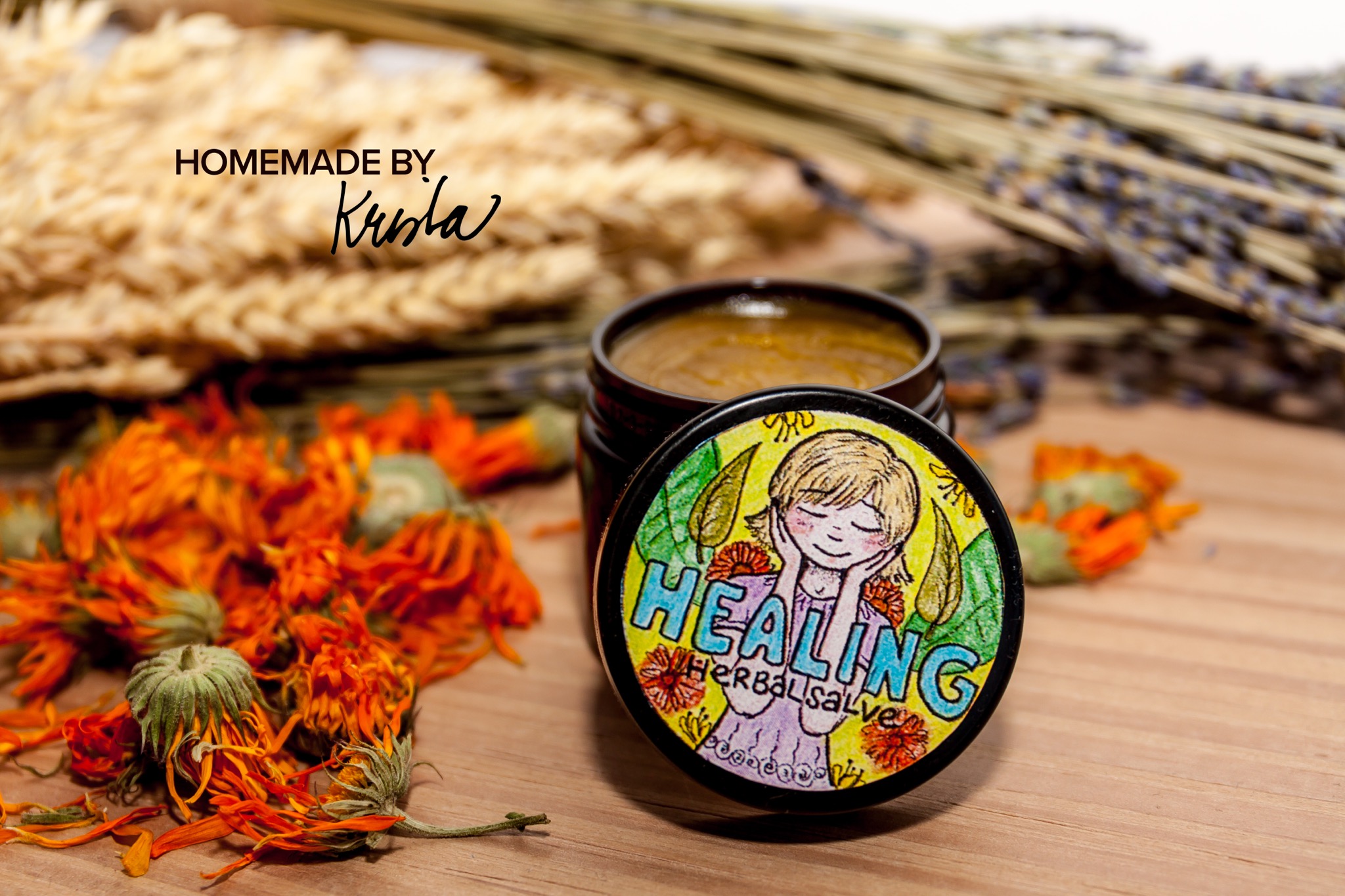
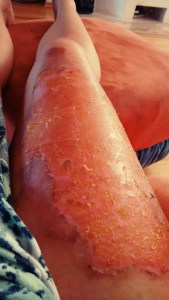
It was the third day of my summer holidays. Teachers look forward to the holidays maybe even more than the students. It was a beautiful sunny day, and I was excited to spend it in my garden. I had no plans other than to soak up the rays with my plant friends and maybe pet a bee or two. I began the day by setting up two jugs of herbs in order to make infused water for my family to drink. As I poured boiling water into the jugs, one of them cracked and burst open exploding boiling water onto my thigh. I watched in horror as the skin of my thigh slipped off and fell in a sheet. Screaming, I called for my daughters to help me. Minutes later, in shock and shaking, I was in an ambulance on the way to the hospital.
Weeks later, after daily dressing changes at the hospital, I was able to walk relatively normally with only a little pain, I was on my way to have the bandages removed and see what my leg looked like. The doctor gave me a topical cream to apply to the exposed and vulnerable new skin. It smelled like gasoline and was a really gross colour. I did not want to put that on my skin. Pig fat was also prescribed…no thanks.
With a modicum of hesitation, I decided to perform a human trial on myself. I remember the exact moment I decided to put my Healing Herbal Salve on my leg instead of the cream my doctor prescribed. (I know we are supposed to listen to the doctor, but I felt some instinctive sense of dread about the cream he gave me.) So I put on my salve, knowing exactly what was in it, who made it (me.) and what each component was capable of doing. My thoughts were, “Well, here goes nothing,” and I hoped for the best.
It was immediately soothing and felt amazing on my painful, sensitive new skin.
Fast forward a few more weeks, and my leg looked great. The doctor declared it “beautiful” and I felt like my human trial was a success. No scarring (a miracle) and very little skin discolouration.
If I could have only one salve in my First Aid Kit it would be the Healing Herbal Salve. It is my most popular product and my friends and clients have used it as a: diaper rash cream, lip balm, face cream, wound healer, rash cream, spot lightener, cracked heels remedy, bee sting remover, sore muscle linament, pulse points stress reliever and more…
I keep this salve in my purse, in my desk at work, in my classroom first aid kit, in every room of our house and in my Travel First Aid Kit.


Healing Herbal Salve
- 1/4 cup (60 ml) St John’s Wort-infused olive oil Infused Oil Recipe
- 1/4 cup (60 ml) Calendula-infused olive oil
- 1/4 cup (60 ml) Comfrey-infused olive oil
- 1/4 cup (60 ml) Plantain-infused olive oil
- 1/4 cup (60 g) beeswax
- 20 drops: Lavender essential oil
In a double boiler (or a pot nestled in a larger pot filled with a bit of water) over medium heat, add the oils and beeswax.
Stir until the beeswax melts and is fully incorporated.
Remove from the heat and allow to cool for a moment.
Add the essential oils. Stir.
Pour into clean and sterilised jars.
Medicinal Actions:
St John’s Wort: anti-inflammatory, antidepressant, promotes tissue repair, Analgesic, antibiotic
Calendula: vulnerary, anti-inflammatory, antibacterial, immune stimulant, antifungal, antiviral, lymphatic, antispasmodic
Comfrey: tonic, demulcent, expectorant, vulnerary, astringent, anti-inflammatory
Plantain: vulnerary, expectorant, diuretic, demulcent, astringent, anti-inflammatory, antiseptic, alterative, hepatoprotective, hemostatic
Lavender: antibacterial, soothing, anti-inflammatory
Safety: Due to the amazing skin healing action of the comfrey contained in this salve, do not use on infected wounds as it may heal the skin with the infection inside.
St John’s Wort
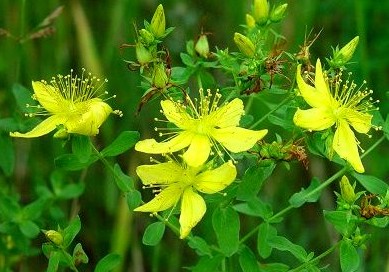
Hypericum perforatum
Common Name: St John’s Wort, Tipton’s Weed, Chase-Devil, Klamath Weed, Touch and Heal, Goatweed
Family: Hypericaceae
TCM Name: Guan Ye Lian Qiao
Ayurvedic Name: N/A
Parts Used: Leaf, Flower
Native To: Europe

Medicinal Notes
According to White Rabbit Institute of Healing:
“St John’s Wort’s common name comes from the flower being harvested on St John’s Day, June 24th. The genus name Hypericum comes from the Greek words hyper (above) and eikon (picture) in reference to the traditional usage of the plant to ward off evil by hanging the plants over religious icons on St John’s day. The species name perforatum refers to the presence of small oil glands on the leaves that look like windows when held against the light (i.e. light perforating the leaves).
It has been used to heal sword wounds as far back as the Middle Ages. The Crusaders used the plants red oil to sooth and heal wounds. It was said that stepping on St John’s Wort at dusk meant a night spent on the back of a fairy horse. Christians identify the herb with St John saying the plant’s red pigment is St. John’s blood from his beheading. General treatments dose at 300mg to 1000mg daily. Macerating the flowers in oil yields a red sedative, analgesic rub that alleviates neuralgia. Used in homeopathy to heal post-surgery, cuts and wounds.
The flowers bloom midsummer and when crushed turn blood red, the color associated with wounds, menses, fertility and childbirth. It was felt that the plant was most potent during this period. Culpeper wrote, “The decoction of the herb and flowers… is [also] good for those that are bitten or stung by any venomous creature.” “
Harvesting
We harvest St John’s Wort in mid-summer, usually around July 17th. We are on the hunt early July to make sure that we locate patches of St John’s Wort that have lots of unopened buds. When crushed, the buds secrete a reddish-purple liquid that stains the fingers. I harvest almost exclusively buds as this is what has most of the potency. Saving the leaves and stems for tea, I process the buds fresh. I chop them as finely as possible and put them up immediately for tincture and infused oil. The tincture and oil should have a vibrant red colour. From my experience, dried material does not have the same potency as fresh and this is especially true for St John’s Wort.
Constituents
St John’s Wort contains Hyperforin, Tannins, Flavonoids, Resins, Glycosides, Carotenes, Pectin, Hyproside.
Uses
According to Annie’s Remedy:
“St. Johns Wort has a demonstrated ability to act as an antidepressant in cases of mild depression and anxiety. St. John’s Wort is a tonic for the entire nervous system. This action is most strongly linked to two phytochemicals, hyperforin and hypericin. St. Johns was a useful member of the pharmacopoeia centuries before its use as an antidepressant was discovered. Drinking a cup of St Johns tea before bedtime can help children and adults troubled by incontinence, and M. Grieve recommended it be used in all pulmonary complaints, bladder troubles, in suppression of the urine, dysentery, worms, and diarrhea.
St. John’s is also effective in the treatment of herpes lesions. Compresses soaked in a strong tea, the infused oil or a tincture can be applied to active lesions. The anti-viral activity of St. John can also be used to treat flu viruses (but not cold viruses).
The fresh flowers of St. Johns when infused in oil produce a beautiful and powerful red oil that is anti-inflammatory and analgesic. This therapeutic oil has so many uses that you can sum it up by saying if it hurts, soothe it with St. Johns Oil. Some of the skin care uses for this oil include healing burns and damaged skin. Use St. Johns wort oil to calm the pain of sciatica, arthritis, fibromyalgia, muscle aches, PMS and breast tenderness.”
Tea: 2 cups of infusion taken throughout the day (infuse 1 heaping T of leaves per cup of water, and steep at 10-15 minutes
Salve/Compress: Use externally as needed
Tincture: 1-2 ml of tincture 3 times per day, at 1:4 strength
Extra caution should be exercised if one is taking any prescription drugs. If used in combination with other drugs or if other drugs are part of a treatment plan, St John’s Wort might react with these drugs and either enhance or inhibit the breakdown of these drugs. SSRI antidepressants should not be taken with St John’s Wort.
Studies have reported that the St John’s Wort plant can reduce the effectiveness of some prescription drugs like Digoxin, Warfarin and Indinavir, as well as birth control pills.
As safety information and the possible St John’s Wort side effects on pregnant or nursing women as well as young children are presently not really available, it is strongly recommended that these groups of people do not consume the herb.
Also, patients in advanced stages of depression may not want to rely only on St John’s Wort, since it has been proven effective mostly in treating mild to moderate forms of depression.
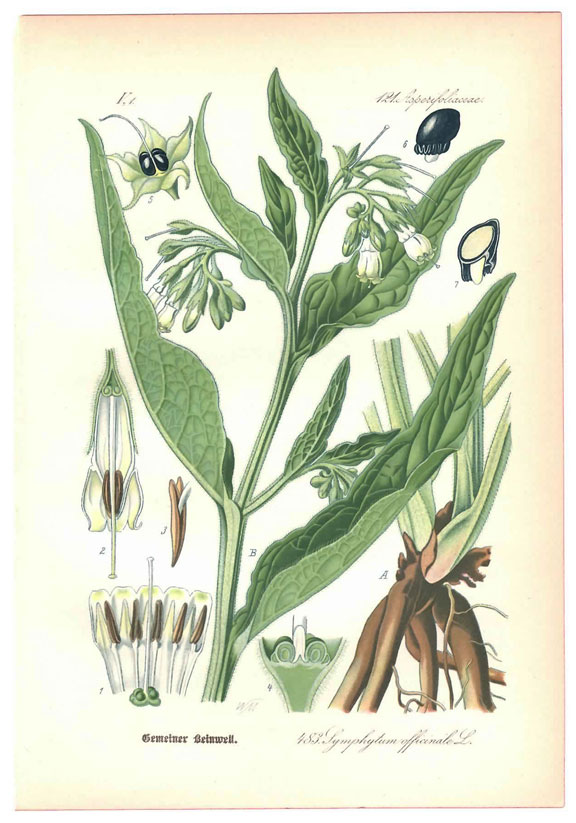
Comfrey

Symphytum officinale
Medicinal Notes
According to The Pharmaceutical Journal:
“Dioscorides’s ‘Materia medica’ is the oldest materia medica in Europe. Created at the same time as, but independent from, the ‘Naturalis historia’, it has been shaping European and Arabic phytotherapy for nearly 2,000 years
Dioscorides also mentions comfrey: “The roots below are black on the outside and white and slimy on the inside. …Finely ground and then drunk they are beneficial for those spitting blood and those suffering from internal abscesses. Used as a compress they also seal fresh wounds. They have a joining together effect when cooked with pieces of flesh. They act as cataplasm in the case of inflammation, especially in the anal area.”
Comfrey (Symphytum officinale) derives its name from the Greek term symphyton, (symphytum in Latin), from the root symphyo; “I grow together”.
Harvesting
Foliage is at its best if cut before blooming time. The plant reaches a height of over two feet and spreads to more than a metre across. Comfrey leaves have a high moisture content and dry more slowly than some of the herbs you may be used to working with. Make sure the leaves are crumbly before you store them, though, since any remaining dampness will cause mold.
Harvest roots in the fall. To preserve comfrey for later use, roots can be sliced and dried or macerated as an oil-infusion.
Constituents
Comfrey contains tannin, rosmarinic acid, allantoin, steroidal saponins, mucilage, inulin, pyrrolizidine alkaloids, gum, carotene, glycosides, sugars, beta-sitosterol, triterpenoids, vitamin b-12, protein, zinc.
Uses
According to Annie’s Remedy:
“Comfrey is a marvelous herb and is one of the best-known healing herbs of all times. Comfrey relieves pain and inflammation caused by injuries and degeneration, especially the symptoms of rheumatoid arthritis and osteoarthritis. Comfrey salves and oils can be used in arthritic pain relieving massages. In a recent study patients with painful osteoarthritis of the knee treated with comfrey root extract in an ointment showed a reduction in pain , mobility of the knee improved and quality of life increased. (NIH)
Comfrey salves, ointments and teas are best known for the topical treatment of burns, skin ulcerations, abrasions, lacerations, flea and insect bites, and just about any skin irritation. Comfrey’s astringent tannins form a protective surface over wounds that promotes healing. You may want to try comfrey or allantoin skin creams for diabetic sores. For weeping eczema, make a tea of comfrey and apply the liquid as a compress. Comfrey relieves pain and speeds healing of pus-filled wounds, and accelerates tissue healing in cases of insect bites.
Fresh leaves can be applied to bruises, fractures, sprains, and other injuries. Many healing effects of comfrey are attributable to allantoin, a compound shown to speed cell production both inside and outside the body. Comfrey works so fast that many herbalists will add antibacterial herbs such as goldenseal or thyme to comfrey salves to prevent sealing bacteria inside a fast healing wound.”
I grow two types of comfrey, yellow which is petite and powerful (found in shady forest patches) and the much larger and ubiquitous purple (found in large groupings alongside our meadow paths).
| The creamy yellow-flowered form is stated by Hooker to be Symphytum officinale proper, and the purple flowered he considered a variety and named it S. officinale, var patens. The botanist Sibthorpe makes a definite species of it under the name patens. |
Because my family is constantly tripping, banging toes and twisting ankles – clumsy, I guess- comfrey poultices are used by us and given also as remedies to my clients very often. I am happy to offer fresh leaves and roots from my garden. My Knit-Together Salve is used topically on any internal wound and as an amazing massage salve to support muscle healing.
Salve/ poultice: Use externally as needed.
There is much controversy about taking Comfrey internally, especially root preparations. Comfrey root contains pyrilizidine alkaloids, which can cause liver damage. I would recommend using Comfrey only as an external healer. ONLY use Comfrey on a wound once you’re sure any infection has been taken care of as it heals skin so rapidly as to overtake any infection before it’s been cleanly dealt with.
The Plantain Primer
Thank you to Ian Opal Kesling at Herbrally for this compendium of Plantain uses:
For drawing blisters/pimples to a head, or drawing foreign objects from the skin: plantain leaf and piñon resin warm-infused in oil.
For minor cuts/scrapes/burns: plantain leaf, comfrey leaf, and calendula flower infused in oil.
To stop bleeding: Plantain leaf and yarrow
For hemorrhoids: Plantain leaf, marshmallow root, and witch hazel leaf
For poisonous plant rashes: Plantain leaf and jewelweed
For itchy bug bites: Plantain leaf, calendula, and aloe gel
For infections: plantain leaf, yellow dock, and chaparral
For diarrhea: plantain leaf infusion with plantain seed
For constipation: yellowdock, triphala, and plantain seed
For cystitis/UTI’s: plantain leaf, uva ursi, marshmallow root, juniper berry
For chronic urinary discomfort: plantain leaf, marshmallow root, cleavers, chickweed
For cough/bronchitis: hot infusion of plantain leaf, osha, elecampane, licorice, and thyme
For ulcers and digestive inflammation: Plantain leaf, slippery elm, marshmallow root, and licorice.
Plantain
Plantago ssp
Medicinal Notes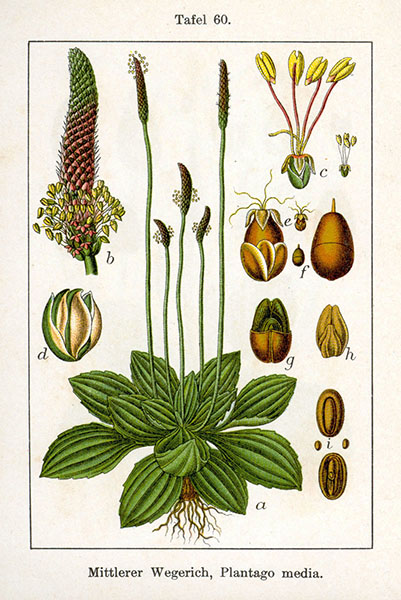
Open from the east, mighty inside.
over you chariots creaked, over you queens rode,
over you brides cried out, over you bulls snorted.
You withstood all of them, you dashed against them.
May you likewise withstand poison and infection”
Plantain can be found in large swaths alongside paths, in meadows and vacant lots. It is considered by some an annoying, if not invasive, weed. As for me and many others, it is a treasure of great value.
Harvesting
Plantain leaves are an edible green, good raw in salads or lightly sauteed. For culinary use, gather leaves in the early spring when they are young and tender. Older leaves are too tough and stringy to be palatable. For medicinal uses, the leaves are best harvested in the spring and early summer, before the flowers reach full bloom. In a pinch, though, plantain leaf can be harvested anytime you find it growing. The seeds are easiest to harvest in late summer or fall, when they have dried and can be easily stripped from the stalk. You can also pick the stalks earlier in the summer, dry them yourself, and then remove the seeds.
Constituents
Plantain contains iridoid glycosides (2.5%), aucubin, apigenin, baicalein, catapol, asperuloside, flavonoids, mucilage (2%), tannins (6.5%), phenolic acids, saponins and flavonoids
Uses
According to Herbrally:
“Scientific Research: In parts of the world where herbal medicine is often prescribed by mainstream doctors, plantain is widely recognized as an effective remedy. In Russia, it is commercially cultivated for medicinal use and frequently prescribed by physicians [5]. The German Commission E has authorized its internal use for coughs and bronchitis, as well as external use for inflammatory skin ailments [14]. Plantain is considered anti-inflammatory in both internal and external uses; tests have shown that this may be due to plantain’s iridoid glycoside content, which seems to suppress prostaglandin formation [3]. One particular iridoid glycoside, aucubin, is easily metabolized into aucubigenin, a compound with potent antibacterial properties [3]. In vitro testing has found plantain leaf to be effective against a range of bacteria, including Salmonella typhi, Salmonella paratyphi, Shigella dysenteriae and Staphylococcus aureus [13].”
Plantain leaf is a go-to herb for just about any kind of rash, irritation, bite, sting, or wound. It soothes, cools, disinfects, staunches bleeding, speeds tissue healing, and extracts toxins and foreign matter. Plantain infused oil and liniment are excellent additions to first-aid kits and travel packs.
“A unique trait that sets plantain leaf apart from most other tissue-healing plants is its intense drawing ability. Plantain can help bring a blister or pimple to a head, pull a stinger out of a bee sting, or extract a deeply-imbedded splinter. It is an unparalleled herb for treating poisonous or infected bites and stings, and, when no other treatment is available, can even be used against blood poisoning. (If you are unsure about your ailment PLEASE seek medical attention!) Plantain would also be one of the first recommendations as an internal and external remedy for those suffering from acne and other inflammatory skin conditions. Irritated, inflammatory skin conditions are energetically hot-natured; a cooling and soothing herb like plantain is often much more appropriate than harsh antibacterials and exfoliants or hyper-concentrated, potentially irritating essential oils.”
I prescribe plantain poultice to my clients suffering from acne. Alongside my Detox Tea, this helps to cool, soothe and remedy the symptoms of acne all while supporting the liver’s work to clean the body’s systems.
“Plantain is an excellent herb for internal tissues as well as external skin. In cases of upper respiratory infection and irritated cough, plantain leaf’s expectorant properties help the body expel mucus, while its anti-inflammatory and vulnerary actions calm irritated tissues. In tonsillitis, gargling with and drinking plantain tea can help fight bacteria and draw out puss. Plantain has a mild diuretic effect, and its aucubin content boosts the kidneys’ uric acid production [8]. These properties, along with its cooling, soothing, antiseptic effects, make it a good ingredient in blends for cystitis and urinary tract infections. Plantain leaf also makes an effective treatment for a wide range of digestive complaints. In Russia, doctors prescribe it for stomach ache, low digestive acidity, and for stomach ulcers with low or normal acidity [5]. Plantain can also combat inflammation and prevent infection in cases of diverticulitis and other inflammatory digestive disorders. The seed of the plant is also used for gut health. Psyllium seed, the primary ingredient in Metamucil, is a form of plantain seed, usually sourced from the Plantago ovata or Plantago psyllium species. While psyllium-containing products are generally marketed as bulk laxatives, many find that the soothing, gel-forming soluble fiber of plantain seed can also calm chronic diarrhea.”
As well as being useful for acute complaints, plantain’s harmlessness (barring contraindication or allergy) makes it an excellent herb for tonic use. Plantain purifies the blood, supports the liver and gallbladder, promotes bladder, urinary tract, and digestive health, and offers an array of easily-absorbed vitamins and minerals. For those with a tendency towards ailments of any of these systems, taking plantain regularly can eliminate or lessen the re-occurrence of acute illness.
“For external use, fresh plantain leaf can be juiced or mashed into a poultice, and fresh or dried leaf can be infused in oil, macerated in rubbing alcohol to create a liniment, or brewed like a strong tea for use as a wash or compress. The fresh leaf works very well as a “spit poultice” made by chewing the fresh leaf and applying it to the affected area. This is a trick that kids often love to try out on their mosquito bites and small scrapes (this also creates opportunity to teach kids the importance of conclusively identifying a plant before using it). Chewing a poultice may seem unhygienic to some, but the enzymes in saliva actually convert the aucubin contained in the plant to the more-potent antimicrobial compound aucubigenin . If the spit-poultice is not for you, though, it will also work perfectly well to mash the leaf with a mortar and pestle.”
Plantain is a vital component of my Detox Tea and Healing Herbal Salve.
Tea: 1.5 quarts of infusion taken throughout the day (infuse 1 heaping T of leaves per cup of water, and steep at least 15 minutes and up to 10 hours).
Salve: Use externally as needed.
Tincture: 1-2 ml of tincture 6 times per day, at 1:4 strength
Chronic Symptoms: acute dosage for several days, then decrease to 1 ml of tincture or 1 cup of infusion, 3 times per day.
Plantain is generally considered a safe, edible plant. However, people who take blood thinners or are prone to excessive blood clotting should avoid plantain. Plantain may effect the absorption of medications through the gut, notably lithium and the heart medicine digoxin. It is safest to avoid plantain while taking these medicines, and to take it several hours away from any other prescription drugs. Plantain may increase the potassium-loss associated with prescription diuretics. Because plantain is sometimes used to slightly elevate stomach acid levels and increase secretion of digestive juices, it is best avoided in cases of serious acid reflux. If you are pregnant or nursing, it is best to consult a qualified practitioner before using plantain. As with any plant or substance, allergic reactions are possible.
Natural Deodorant
- I’m trying to treat my skin well. Not just because I am getting older, although I am…no stopping that process, but to maintain my health from the inside out and outside in.
- Recently, I have noticed that my typical deodorant bought at the drugstore is just not good for me. It takes forever to wash off, not a good sign, and it has really been bothering my skin causing rashes and itchiness. Although I’ve tried a few well-known brands, it’s as if my body has just said, “Enough!”
- After reading many articles and papers on the subject, I decided it was time to make this small change to a natural deodorant.
- According to PD Darbre, Division of Cell and Molecular Biology, School of Animal and Microbial Sciences, The University of Reading:
“Aluminium salts are used as the active antiperspirant agent in underarm cosmetics, but the effects of widespread, long term and increasing use remain unknown, especially in relation to the breast, which is a local area of application. Clinical studies showing a disproportionately high incidence of breast cancer in the upper outer quadrant of the breast together with reports of genomic instability in outer quadrants of the breast provide supporting evidence for a role for locally applied cosmetic chemicals in the development of breast cancer. Aluminium is known to have a genotoxic profile, capable of causing both DNA alterations and epigenetic effects, and this would be consistent with a potential role in breast cancer if such effects occurred in breast cells. Oestrogen is a well established influence in breast cancer and its action, dependent on intracellular receptors which function as ligand-activated zinc finger transcription factors, suggests one possible point of interference from aluminium. Results reported here demonstrate that aluminium in the form of aluminium chloride or aluminium chlorhydrate can interfere with the function of oestrogen receptors of MCF7 human breast cancer cells both in terms of ligand binding and in terms of oestrogen-regulated reporter gene expression. This adds aluminium to the increasing list of metals capable of interfering with oestrogen action and termed metalloestrogens. Further studies are now needed to identify the molecular basis of this action, the longer term effects of aluminium exposure and whether aluminium can cause aberrations to other signalling pathways in breast cells. Given the wide exposure of the human population to antiperspirants, it will be important to establish dermal absorption in the local area of the breast and whether long term low level absorption could play a role in the increasing incidence of breast cancer.”
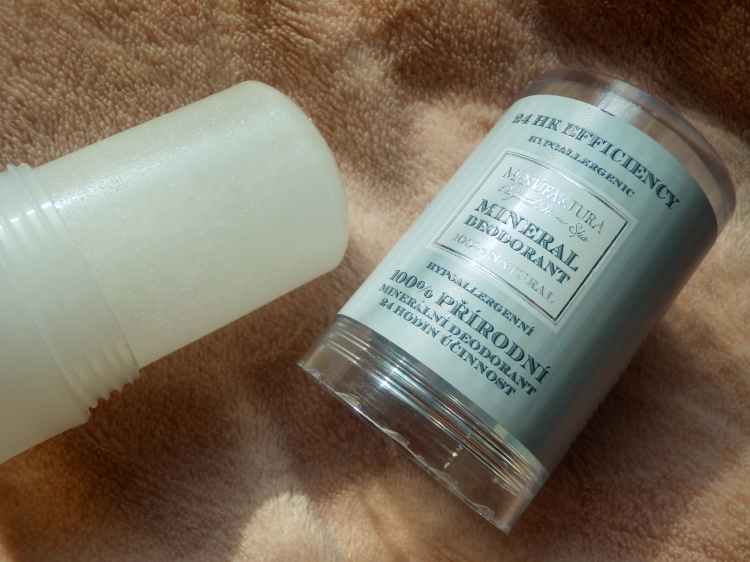
- In one of our shops here in CZ, Manufaktura, where they make natural products, I found a mineral stone deodorant. I was doubtful that it would work, but after a few months of testing, I am completely satisfied. It contains only Potassium alum, not the synthetic aluminum and aluminum chloride used in deodorants.
- I tested another deodorant made in a chain store of freshly made cosmetic products. This deodorant, unfortunately, was irritating to my skin.
- I’m continuing with the mineral stick for now. I would love to hear opinions, ideas and comments about this topic of natural deodorants.
Basic Body Wash

Our skin is our body’s largest organ. Imagine that everything rubbed on our skin is actually being ingested by our body. Would you change some of your beauty products if you had to eat them? Obviously, we don’t need to eat soap (unless we had old-fashioned parents who would wash our mouths out if we said a swear), but it would behoove us to take as much care with what goes on our body as with what goes in.
I’ve already shared that I’ve changed my facial care regime and now use oils to wash my face. I’ve written as well about the skin creams that I use and also about makeup remover.
In this vein, I’d like to share with you the natural body wash that we have been using. This recipe has gone through several iterations and here is the current, most improved one:
Basic Body Wash
- 2/3 cup organic 99% pure castile soap
- 2 T + 2 t hemp seed oil (or any other oil you prefer, almond, olive, poppy seed)
- 2 T + 2 t rose, orange blossom or lavender hydrosol
- 2 t vitamin E oil
- 1 T aloe vera gel
- a few drops of essential oil of your choice
Mix well.
Store in a plastic pump bottle.
Shake well before each use.
This can be used as a face wash. I would recommend hemp seed oil (it is non-comodegenic) and lavender, geranium or chamomile essential oils for damaged or dry, mature skin and tea tree, thyme oils for acne-prone skin.
Please don’t get this in your eyes…it stings! Trust me….
Some ideas for essential oil body wash blends: (thanks Loving Essential Oils)
Relax & Unwind
- 3 drops Lavender
- 3 drops Bergamot
Energizer Bunny
- 3 drops Peppermint
- 3 drops Lemon
- 2 drops Orange
Anxiety Free
- 4 drops Lavender
- 2 drops Lemon
- 2 drops Ylang Ylang
Calming The Storm
- 4 drops Lavender
- 3 drops Chamomile
Just Be Happy
- 2 drops Frankincense
- 2 drops Bergamot
- 2 drops Orange
Uplift The Mood
- 3 drops Bergamot
- 2 drops Lavender
- 2 drops Clary Sage
- 1 drop Ylang Ylang
Peaceful Air
- 4 drops Lavender
- 2 drops Vetiver
Blissful Mood
- 4 drops Orange
- 2 drops Lavender
- 1 drop Ylang Ylang
Hippocrates and the Oxymel

Oxymel: A Medicinal Drink
2500 years ago, Hippocrates prescribed oxymels, a mixture of honey and vinegar, to relieve acute symptoms of disease, tonify and support the body during stress or times of illness, to clear the respiratory tract and put the Humours in balance.
Hippocrates text, On Regimen In Acute Diseases (400 BCE), gives wisdom and practical help for those battling disease or trying to maintain health.
“[Oxymel] promotes expectoration and freedom of breathing … It also promotes flatulent discharges from the bowels, and is diuretic, but it occasions watery discharges and those resembling scrapings, from the lower part of the intestine, which is sometimes a bad thing in acute diseases, more especially when the flatulence cannot be passed, but rolls backwards; and otherwise it diminishes the strength and makes the extremities cold.”
I keep a variety of oxymels in my refrigerator at all times. They are exceedingly easy to make, and delicious. I infuse them with different herbs for different purposes. When I am sluggish, with a general feeling of malaise, I will take a spoonful of an oxymel as an uplifting tonic. When I am suffering from a cold or flu, especially one that is taking up residence in my respiratory tract, I take an oxymel several times a day in this acute situation.
According to greekmedicine.com
“A common medicinal preparation that dates back to antiquity is Oxymel, which is basically a mixture of honey and vinegar. It has many uses, and is a part of many traditional medicines.
Although Oxymel is basically just honey and vinegar, there are several different methods, or recipes, for preparing it. The simplest method is just to mix together 4 parts honey with 1 part vinegar. Apple cider vinegar is the kind most commonly used.
A more elaborate recipe is to thoroughly mix together one part of vinegar, one part of water and two parts of honey. Then, simmer this mixture down slowly until only about a third of its original volume remains. While you’re boiling the oxymel down, skim off any scum or froth that rises to the surface.
After it’s prepared, a supply of Oxymel is always kept handy for various uses. Mix a spoonful of it into a glass of water for a refreshing medicinal drink that’s both restorative and energizing and a cooling febrifuge, particularly for agues, or intermittent fevers. Gargle with this drink to soothe and heal a sore throat.
Used full strength or in a less diluted form, Oxymel greatly aids in the expectoration of excess phlegm from the lungs and respiratory tract, opens the airways, and makes breathing easier. Oxymel is also used as a base for medicated expectorant syrups, like Vinegar of Squills. Or, it can be mixed into hot expectorant herb teas to enhance their effects.
Dr. D. C. Jarvis authored a bestselling book in 1958 called Folk Medicine in which he touted honey and apple cider vinegar as a panacea or cure-all. He used this ancient Oxymel preparation to treat arthritis, gout, high cholesterol, as a metabolic stimulant to promote weight loss, and for longevity and life extension. “
Oxymel Recipe
- 2/3 part organic apple cider vinegar
- 1/3 part organic local honey (for a sweeter oxymel use 1:1 ratio)
- fresh herbs of your choice
Chop the fresh herbs as finely as possible.
Fill a jar half way with the herbs.
Cover the herbs with honey.
Add the vinegar and cover with a lid.
Shake the jar daily for two weeks minimum.
Strain out the herbs and store in the refrigerator.
Oxymels will keep for a year, refrigerated.
A few herbs to consider when creating oxymels: (thank you The Nerdy Farm Wife)
- Rosemary: Useful for low energy and poor circulation, good for digestion and nerves. Avoid daily use or medicinal levels if pregnant.
- Sage: antifungal, antibacterial, antiviral. Contraindications: dries up milk flow, not for medicinal use by pregnant or nursing women, do not take for an extended amount of time.
- Thyme: for upper respiratory infections, coughs, bronchitis, antiviral and antibacterial
- Oregano: antibacterial, antiviral, useful for upper respiratory infections
- Bee Balm (Monarda): sore throat, antibacterial, helpful for thick congested coughs, fever
- Mint: stomach soothing, digestive aid
- Rose Petals: astringent, anti-inflammatory
- Elder Flowers: specific for sore throats, immune stimulating
- Raspberry Leaves: general tonic for women
- Lemon Peel: can be added for flavor
Enhance Your Calm Tea
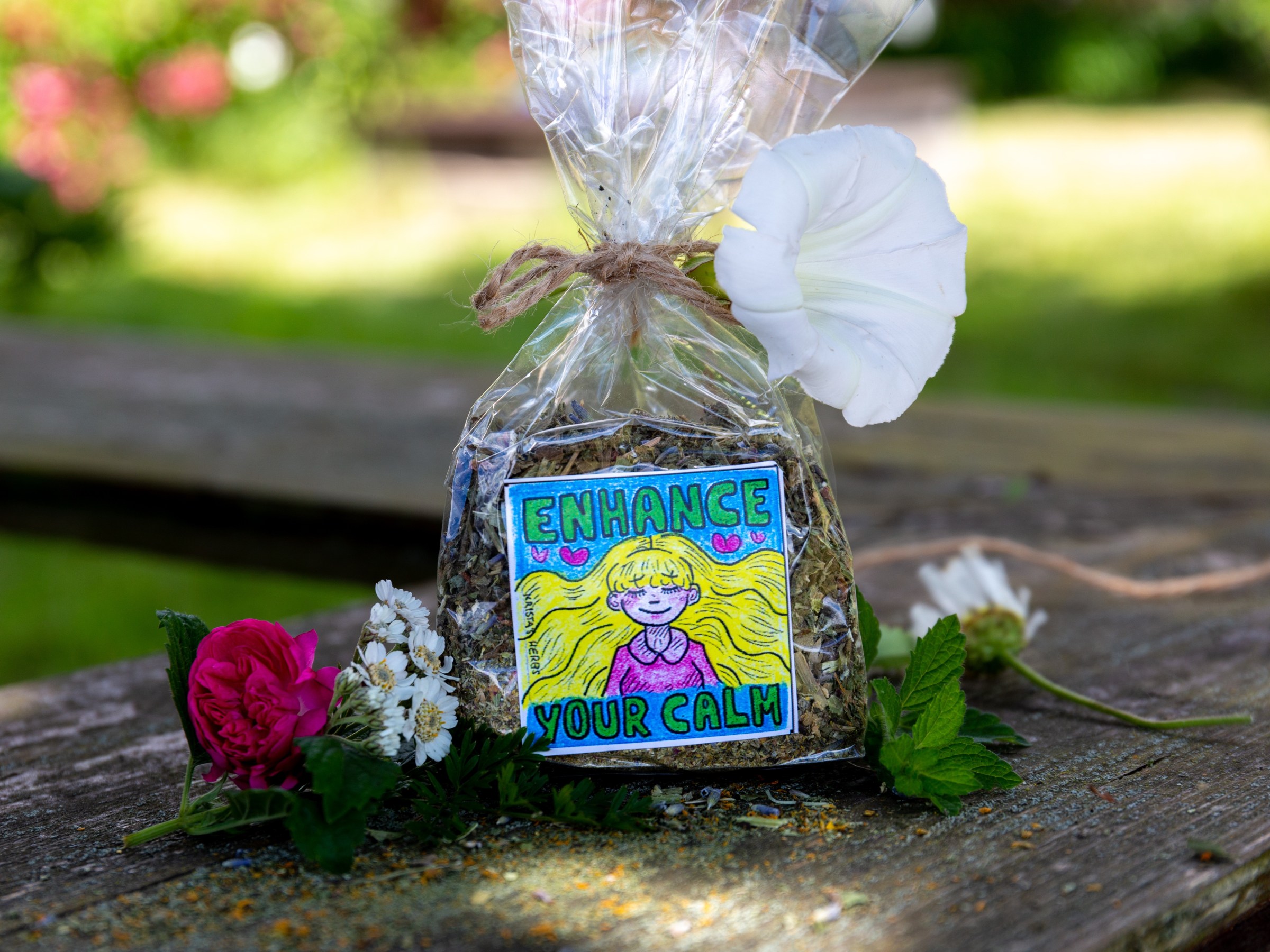
This is my go to tea to remedy a stressful day, help me sleep or improve my mood. It is flavourful and relaxing.
My clients enjoy this one a lot.
Enhance Your Calm Tea
- 2 parts chamomile Matricaria chamomila
- 1 part lavender Lavandule angustifolia
- 1 part linden flower and leaf Tilia cordata
- 1 part skullcap Scutellaria laterifolia
- 1 part rose petals Rosa spp.
Grind the herbs in a mortar and pestle or with a juicer or herb grinder.
Store in a cool, dry, dark place.
1 tablespoon of tea per cup of boiling water, let steep for 5-10 minutes covered.
Dose: 1 cup of tea as needed, up to 3 cups per day

Medicinal Actions:
Chamomile: sedative effect, antispasmodic, muscle relaxant, studies have shown that chamomile works on the same part of your brain and nervous system as anti-stress medication
Lavender: carminative, sedative, bitter, antidepressant, hypnotic
Linden: nervine, anxiolytic (eases anxiety), antispasmodic, hypotensive
Skullcap: nervine, antispasmodic, relaxant, mood stabilser
Rose: nervine with affinity for uplifting mood and relieving depression, antispasmodic, sedative
Chamomile Face Cream
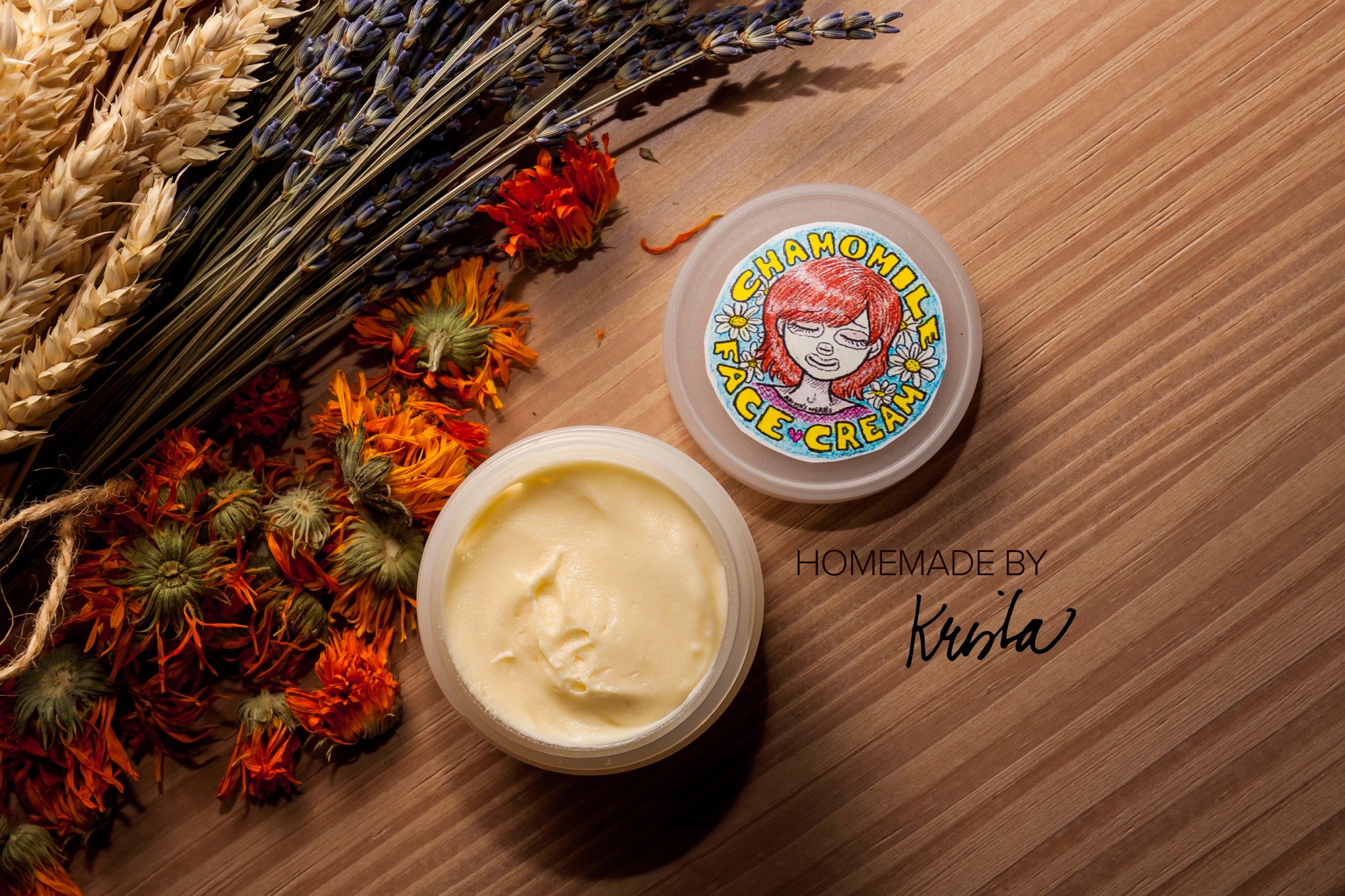
This is an excellent face or body cream adapted from Rosemary Gladstar’s classic cream recipe.
I personally find this face cream to be gentle, hydrating, and soothing. It isn’t greasy or heavy, yet it feels like it is deeply soothing and calming to my skin.
Chamomile Face Cream
- 3/4 cup (180ml) Chamomile-infused sweet almond oil
- 1/4 cup(60ml) Balm of Gilead -infused almond oil
- 1/8 cup (30 ml) Shea butter
- 1/8 cup (30 ml) Coconut oil
- 1/8 cup (30 g) beeswax
- 1/4 cup (60ml) commercially prepared organic aloe vera gel
- 3/4 cup (180 ml) rose, lavender or orange blossom hydrosol
- 10 drops of Vitamin E oil
- A few drops of lavender essential oil
Combine the oils, butter and beeswax in a saucepan over very low heat until everything is melted together
Pour into a measuring cup or container and let cool until the mixture is somewhat firm, thick and creamy
Scrape the oil mixture into a blender.
In a separate bowl. Combine the hydrosol, gel and essential oil
Turn the blender in full speed and slowly drizzle the the water mixture into the vortex created by the blender
Continue blending until all the water mixture has been absorbed by the oil.
The blender should “choke” as the mixture thickens and becomes creamy
After turning off the blender, scoop the cream into small jars.
Store the cream in a cool dark place.
Medicinal Actions:
Chamomile: soothing, vulnerary, affinity for skin disorders such as eczema and psoriasis, anti-inflammatory
Shea butter: moisturising, anti-inflammatory, aids in skin’s natural collagen production
Balm of Gilead: antioxidant, heals scars, clears up eczema and psoriasis, anti-inflammatory
Lavender: antibacterial, soothing, anti-inflammatory