Krista's Herbarium
a collection of herbal remedies, recipes, and reveries
Perfume 301
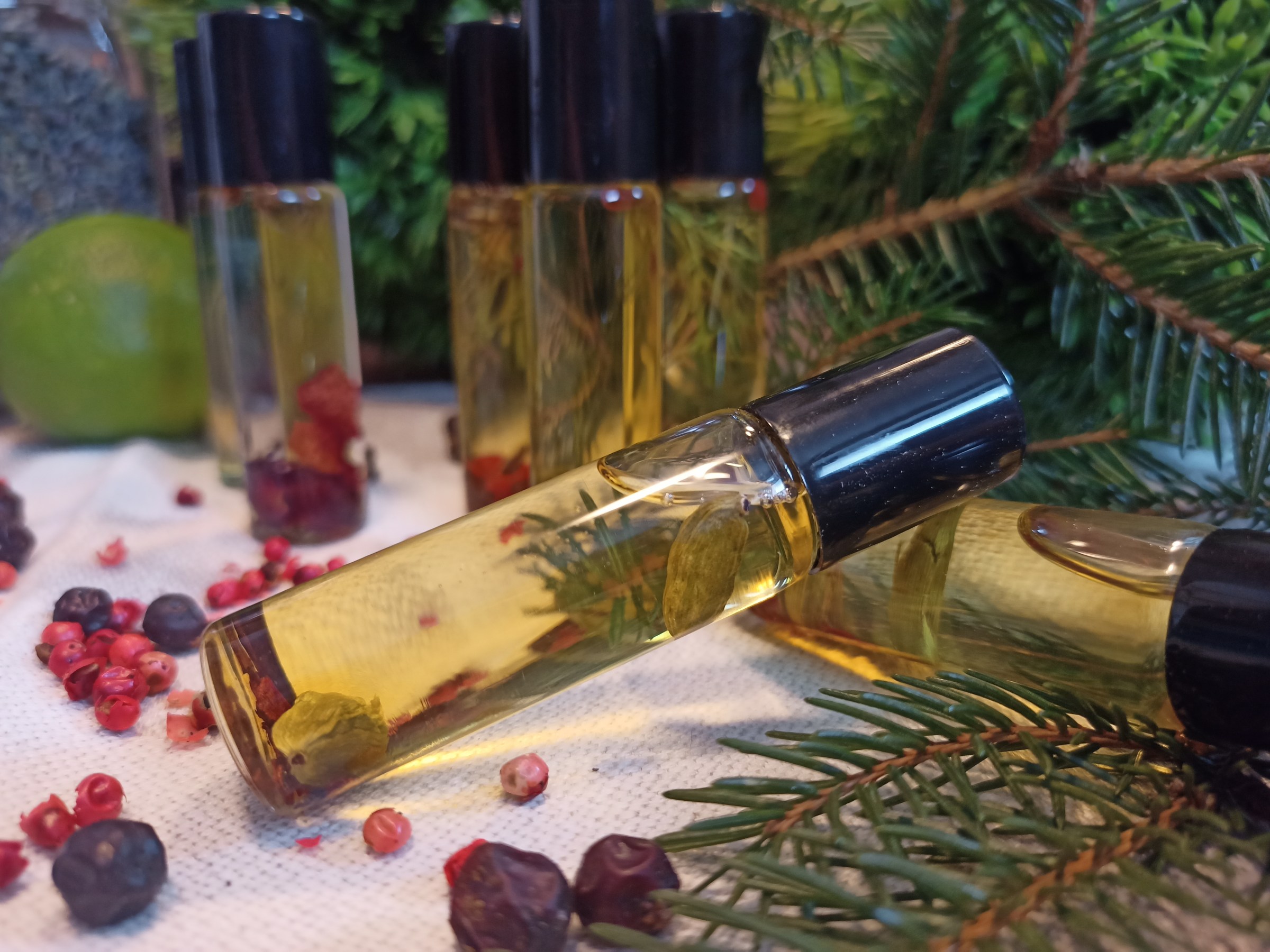
Humanity will be saved through the flower. -Huvenol
Classification of Aromatherapy:
Cosmetic aromatherapy: This therapy utilizes certain essential oils for skin, body, faceand hair cosmetic products. These products are used for theirvarious effects as cleansing, moisturizing, drying and toning. A healthy skin can be obtained by use of essential oils in facial products. On a personal level, cosmetic aromatherapy of full-body or foot bath will be a simple and an effective way tohave an experience. Similarly, few drops of appropriate oil gives a rejuvenating and revitalizing experience.
Essential oils used in aromatherapy: A systemic review- Babar Ali et al.
Massage aromatherapy: The use of grape seed, almond, or jojoba oil-in pure vegetable oils-during massage has been shown to have wonderful effects.This is also known as the healing touch of massage therapy.
Medical aromatherapy: The founder of modern aromatherapy Rene-Maurice Gatte-Fosse has used essential oils to massage patients during surgery, thus utilizing the medical aromatherapy knowledge of the effect of essential oils on promoting and treating clinically diagnosed medical ailments.
Olfactory aromatherapy: Inhalation of essential oils has given rise to olfactory aromatherapy, where simple inhalation has resulted in enhanced emotional wellness, calmness, relaxation or rejuvenation of the human body. The release of stress is welded with pleasurable scents which unlock odor memories. Essential oils are complementary to medical treatment and should never be taken as a replacement for it.
Psycho-aromatherapy: In psycho-aromatherapy, certain states of moods and emotions can be obtained by these oils giving the pleasure of relaxation, invigoration or a pleasant memory. The inhalation of the oils in this therapy is direct though the infusion in the room of a patient. Psycho-aromatherapy and aromacology, both deal with the study and effects of aroma be it natural or synthetic. Psycho-aromatherapy has limited itself with study of natural essential oils.
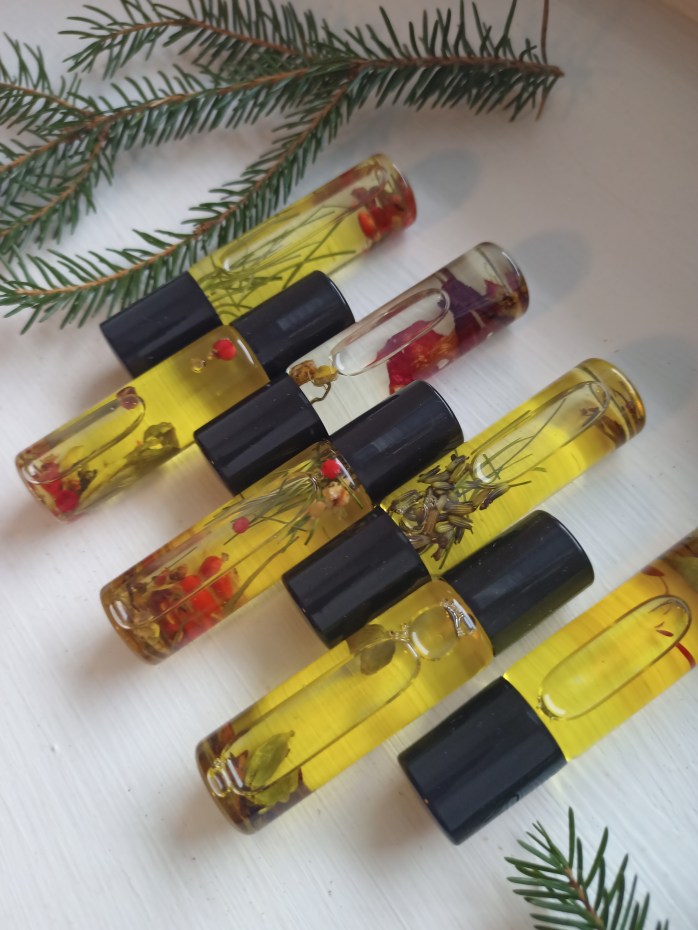
Essential Oils by Healing Action:
- Clary Sage (Salvia sclarea): uterine tonic, support during menstruation, antispasmodic, aphrodesiac, skin tonic (controls oil production, helps reduce wrinkles, helps to control acne, helps to clear cellulite), helps to regulate cortisol levels, antimicrobial
- Eucalyptus (E. globulus): immunostimulant, helps to clear cystitis, affinity for the respiratory system (remedy for sore throat, catarrh, cough, bronchitis) helps with aches and pains, anti-arthritic
- Geranium (Pelargonium graveolens): helps to clear skin issues such as eczema, remedy for aging skin, anti-fungal, anti-anxiety, antibacterial, antidiabetic, insect repellent, nervine, sedative, helps in cases of endometriosis, calms pain
- Lavender (Lavandula officinalis): sedative, mental health support, anti-anxiety, antibacterial, antifungal, vulnerary, calms headaches, used for pain management, immunostimulant, support for menstrual issues
- Lemon (Citrus limon): antiseptic, astringent, detoxifying, clears and brightens skin, immunostimulant, digestive, helps with pain management, antiemetic,decreases nausea, mood lifter
- Peppermint (Mentha piperita): antispasmodic, anti-arthritic, analgesic, anti-inflammatory, antimicrobial, antiseptic, astringent, digestive, carminative, anti-fungal, nervine, vasoconstrictor, decongestant, stomachic, remedies headaches, respiratory support
- Roman Chamomile (Chamaemelum nobile): calming nervine, remedies allergies, antiinflammatory, antispasmodic, helps with menstrual disorders, sedative, anti-ulceric, analgesic, vulnerary, affinity for gastrointestinal disorders, combats rheumatic pain, anti-anxiety
- Rosemary (Rosmarinus officinalis): digestive, liver tonic, regulates blood pressure, eases rheumatic pain, nervine, improves cognitive function, elevates mood, skin tonic, relieves menstrual cramps, promotes hair growth
- Tea Tree (Melaleuca alternifolia): immune booster, antiseptic, anti-inflammatory, antiviral, insecticidal, respiratory support, aids in respiratory issues (cough, catarrh, bronchitis)
- Ylang Ylang (Cananga odorata): slows heart rate, decreases rapid breathing, remedy for shock, antidepressive, euphoric, anxiolytic, aphrodesiac, anti-stress
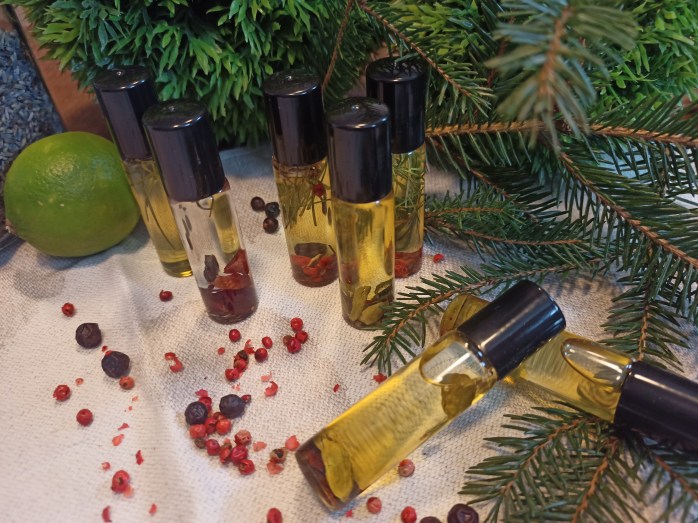
Essential oils for common problems:
Conditions
Anxiety
Essential Oils
- Angelica archangelica Angelica
- Cistus ladaniferus Labdanum
- Citrus aurantum Petitgrain
- Citrus sinensis Sweet Orange
- Cymbopagon martinii Palmarosa
- Foeniculum vulgare Fennel
- Lavandula officinalis Lavender
- Litsea cubeba May Chang
- Ocimum basilicum Basil
- Origanum majorana Sweet Marjoram
- Pelargonium graveolens Geranium
- Pimpinella anisum Anise seed
- Pogostemon patchouli Patchouli
- Valeriana officinalis Valerian
Antibacterial
- Eucalyptus globulus Eucalyptus
- Hedychium gardnerianum Kahili Ginger
- Lavandula officinalis Lavender
- Leptospermum scoparium Manuka
- Melaleuca alternifolia Tea Tree
- Ocimum basilicum Basil
- Rosmarinus officinalis Rosemary
- Salvia sclarea Clary Sage
- Zingiber officinalis Ginger
Antioxidant
- Citrus limon Lemon
- Cupressus sempervirens Cyprus
- Eucalyptus globulus Eucalyptus
- Leptospermum scoparium Manuka
- Nigella sativa Black Seed
Burnout
- Helichrysum angustifolium Everlasting
- Mentha piperita Peppermint
- Ocimum basilicum Basil
Focus
- Litsea cubeba May Chang
- Mentha piperita Peppermint
- Rosmarinus officinalis Rosemary
Facing Challenges
- Angelica archangelica Angelica
- Cistus ladaniferus Labdanum
- Citrus aurantum Petitgrain
- Citrus sinensis Sweet Orange
- Cymbopagon martinii Palmarosa
- Lavandula officinalis Lavender
- Litsea cubeba May Chang
- Ocimum basilicum Basil
- Origanum majorana Sweet Marjoram
- Pelargonium graveolens Geranium
- Pogostemon patchouli Patchouli
- Valeriana officinalis Valerian
Fatigue
- Angelica archangelica Angelica (nervous)
- Cistas ladaniferus Labdanum
- Citrus aurantium Neroli (chronic)
- Citrus paradisi Grapefruit (exhaustion)
- Coriandrum sativa Coriander (mental)
- Cymopogon nardus Citronella
- Eucalyptus globulus Eucalyptus (chronic)
- Juniperus communis Juniper
- Mentha spicata Spearmint (mental)
- Pelargonium graveolens Geranium (nervous)
- Pinus sylvestris Scots Pine
- Rosmarinus officinalis Rosemary
- Salvia sclarea Clary Sage (nervous)
- Zingiber officinalis Ginger
Fungal Infections
- Aloysia citrodora Lemon Verbena
- Angelica archangelica Angelica
- Artemesia absinthium Wormwood
- Brassica nigra Black Mustard
- Cuminum cyminum Cumin
- Cymbopagon nardus Citronella
- Melaleuca alternifolia Tea Tree
- Origanum majorana Sweet Marjoram
- Tanacetum vulgare Tansy
Hormones
- Citrus aurantium Neroli
- Pelargonium graveolens Geranium
Immune System
- Eucalyptus globulus Eucalyptus
- Lavandula officinalis Lavender
Inflammation
- Eucalyptus globulus Eucalyptus
- Melaleuca alternifolia Tea Tree
- Zingiber officinalis Ginger
Insect Repellent
- Foeniculum vulgare Fennel
- Lavandula officinalis Lavander
- Nepeta cataria Catnip
Insomnia
- Angelica archangelica Angelica
- Cananga odorata Ylang Ylang
- Chamaemelum nobile Roman Chamomile
- Citrus aurantum Neroli
- Citrus ladniferus Labdanum
- Citrus bergamia Bergamot
- Citrus limon Lemon
- Citrus reticulata Mandarin
- Citrus sinensis Sweet Orange
- Cuminum cyminum Cumin
- Juniperus communis Juniper berry
- Lavandula officinalis Lavender
- Litsea cubeba May Chang
- Melissa officinalis Lemon Balm
- Myrtus communis Myrtle
- Ocimum basilicum Basil
- Origanum majorana Sweet Marjoram
- Pimpinella anisum Anise seed
- Ravensara aromatica Ravensara
- Thymus vulgaris Thyme
- Valariana officinalis Valerian
Memory Loss
- Foeniculum vulgare Fennel
- Litsea cubeba May Chang
- Mentha piperita Peppermint
- Rosmarinus officinalis Rosemary
Muscle cramps, spasms
- Boswellia sacra Frankincense
- Commiphora Myrrh
- Eucalyptus globulus Eucalyptus
- Ferula gummosa Galbanum
- Leptospermum scoparium Manuka
- Pimpinella anisum Anise seed
- Salvia sclarea Clary Sage
- Valariana officinalis Valerian
Pain
- Eucalyptus smithii Gully Gum
- Lavandula officinalis Lavender
- Leptospermum scoparium Manuka
- Origanum majorana Sweet Marjoram
- Pimpinella anisum Anise seed
- Pinus mugo Dwarf Pine
- Ravensara aromatica Ravensara
- Rosmarin officinalis Rosemary
- Zingiber officinalis Ginger
Respiratory Issues
- Foeniculum vulgare Fennel
- Pimpinella anisum Anise seed
- Ravensara aromatica Ravensara
Skin Issues
- Chamaemelum nobile Roman Chamomile
- Nigella sativa Black Seed
- Pelargonium graveolens Geranium
- Ravensara aromatica Ravensara
- Salvia sclarea Clary Sage
Stress
- Angelica archangelica Angelica
- Cistus ladaniferus Labdanum
- Citrus aurantum Petitgrain
- Citrus sinensis Sweet Orange
- Cymbopagon martinii Palmarosa
- Foeniculum vulgare Fennel
- Lavandula officinalis Lavender
- Litsea cubeba May Chang
- Ocimum basilicum Basil
- Origanum majorana Sweet Marjoram
- Pelargonium graveolens Geranium
- Pogostemon patchouli Patchouli
- Valeriana officinalis Valerian
Stings and Bites
- Eucalyptus globulus Eucalyptus
- Foeniculum vulgare Fennel
- Chamaemelum nobile Roman Chamomile
Virus
- Lavandula officinalis Lavender
- Litsea cubeba May Chang
- Melaleuca alternifolia Tea Tree
- Mentha piperita Peppermint
- Ocimum basilicum Basil
- Origanum majorana Sweet Marjoram
- Mentha piperita Peppermint
- Ravensara aromatica Ravensara
- Rosmarinus officinalis Rosemary
Wounds
- Achillea millefolium Yarrow
- Eucalyptus globulus Eucalyptus
- Foeniculum vulgare Fennel
- Lavandula officinalis Lavender
- Ravensara aromatica Ravensara
what is aromatic healing?
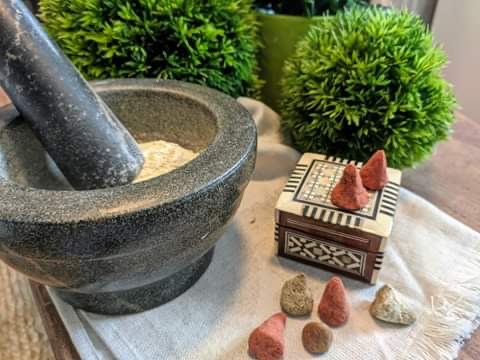
The green earth sends her incense up. From many a mountain shrine; From folded leaf and dewey cup She pours her sacred wine.
John Greenleaf Whittier
I love burning incense. I feel that it enhances my mood, lightens my spirit and provides for me a grounding atmosphere. Past that, I’ve never given it much thought.
As an herbalist, I’ve made smoking blends and aromatic herb smudges as well as essential oil inhalations. What is the difference between these herbal medicinal preparations and the incense sticks and cones we buy to make our house smell good?
At first, I began to think about the ingredients in the incense sticks and cones that you can find in local shops. Imagine the aforementioned herbal preparations, intended for inhalation, carefully chosen for their medicinal actions and benefits as compared to shop-bought incense cones marked “Strawberry”. From where did they get that strawberry fragrance? What hidden chemicals are lurking within? What exactly are we inhaling and why?
Furthermore, I asked myself what benefits can we get from burning incense; if it can be recognised and used more with the intention as an herbal healing preparation.
And then to explore that intention. What is our intention behind burning incense? Is it for creating a fragrant atmosphere? Is it a spiritual or sacred ritual to bring a sense of connectedness? Is it to change a mindset, to allow for an uplifting of mood? Can it serve a medicinal purpose alongside these other valid, yet more mainstream, ideas of the purpose of incense?
My hope is to bring another layer to herbal healing through the more purposeful and curated use of incense. I strive to connect the use of incense for fragrance with the healing constituents within the incense in order to meet my clients’ physical, emotional and spiritual needs with these precious plants.
Let’s begin:
An unexpected find: an incense recipe among medical remedies
Written in an insular script in c.800, Codex Sangallensis (csg.) 761 contains a variety of medical texts, including a collection of nearly fifty recipes and remedies covering pages 51–66 unattributed to a specific classical or late antique author. The final entry of this recipe collection is entitled Thimiama (see Fig 1). The recipe lists a handful of ingredients and quantities, but provides neither further instructions for its preparation nor information on its use:
Incense in medicine: an early medieval perspective
Claire Burridge

The word thymiama is defined by Isidore of Seville as ‘incense’, a Greek‐derived synonym for incensum, thereby suggesting that this entry is a recipe for incense. 3 Since incense is intended to release fragrant smoke when burned, the recipe’s aromatic ingredients fit with this identification…As noted above, the incense recipe forms the end of the recipe collection and is then followed by an excerpt of Oribasius’ Synopsis; the manuscript also contains extensive selections of Oribasius’ Euporista as well as excerpts from the Hippocratic and Galenic corpora.
Incense in medicine: an early medieval perspective
Claire Burridge
We have seen enough documentaries to know that throughout history, smudging, smoke inhalation and incense in some form has been used as ancient medicine. If I asked you to picture a shaman, I’m almost positive that you would picture someone who is burning something and waving a feather over it for his patient to inhale.There may be bones also somewhere in there, too. At least, this is a stereotype many have that is not easily altered.
On every continent, ancient peoples used the smoke of burning plants to treat patients for countless ailments and illnesses. The original application of plant smoke therapy was to burn aromatic herbs or medicinal tree resins on hot charcoal from a fire, and “bathe” the patient in smoke by fanning it towards them and around their bodies, or allow the patient to take deep inhales of the fragrant fumes for a certain period of time…In these holistic treatments, practitioners cater to internal healing through ingested herbs, teas, topical treatments, medicinal foods, or other applications, while also prescribing medicine through the airways (also internal medicine) in the form of incense. This approach adds another layer of depth, treating the root cause and symptoms together from every possible angle.
Incense As Medicine- Evan Sylliaasen
aromaticmedicine
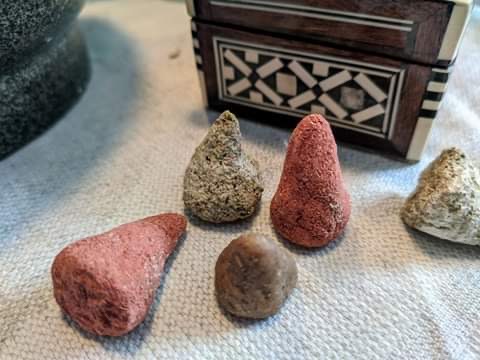
When I was in Japan a few years ago, I fell in love with so many aspects of the culture as have many other Westerners like me. I long to go back there and study Kampo (Traditional Japanese Medicine) as I love their approach to learning and sacredness that elevates the seemingly mundane. With this in mind, I hoped to find some thoughts from the Japanese culture of elevating the mundane regarding the burning of incense.
A short lesson on the virtues of Kodo courtesy of Wikipedia:
Kōdō (香道, “Way of Fragrance”) is the art of appreciating Japanese incense, and involves using incense within a structure of codified conduct. Kōdō includes all aspects of the incense process, from the tools (香道具, kōdōgu), to activities such the incense-comparing games kumikō (組香) and genjikō (源氏香). Kōdō is counted as one of the three classical Japanese arts of refinement, along with kadō for flower arrangement, and chadō for tea and the tea ceremony. The “Ten Virtues of Kō” (香の十徳, kōnojūtoku) were formulated, which is a traditional listing of the benefits derived from the proper and correct use of quality incense:
The Ten Virtues of Kō
1. 感格鬼神 : Sharpens the senses
2. 清浄心身 : Purifies the body and the spirit
3. 能払汚穢 : Eliminates pollutants
4. 能覚睡眠 : Awakens the spirit
5. 静中成友 : Heals loneliness
6. 裏愉閑 : Calms in turbulent times
7. 多而不厭 : Is not unpleasant, even in abundance
8. 募而知足 : Even in small amounts is sufficient
9. 久蔵不朽 : Does not break down after a very long time
10. 常用無障 : A common use is not harmful
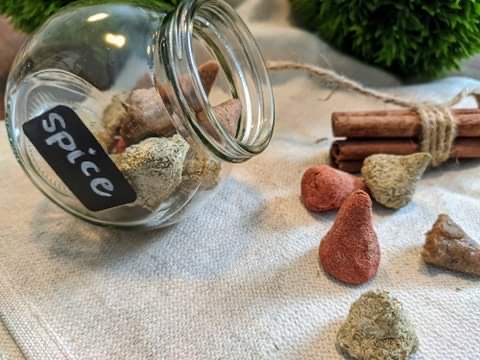
Join me on this path of uncovering the medicinal benefits of incense. I am currently compiling recipes and remedies for specific issues and ailments and experimenting with creating these beautiful natural herbal incese cones. It is both science and art. And, I can’t express in words how gloriously fragrant both my workshop and house currently are thanks to these experiments.
And now for some bad news:
The commercial production of incense has created a problem for the healing and medicinal intentions of incense burning. I intend to make my incense cones and sticks by hand from materials I have grown or curated and processed myself. I have spent many hours in the past month grinding resins, barks and woods by hand in my marble mortar and pestle.
But what of these ones marked “Strawberry”?
What are the downsides to incense?
Incense burning emits smoke containing particulate matter, gas products and other organic compounds and causes air pollution, airway disease and health problems. When incense smoke pollutants are inhaled, they cause airway dysfunction. Incense smoke is a risk factor for elevated cord blood IgE levels and has been indicated to cause allergic contact dermatitis. Incense smoke also has been associated with neoplasm. However, several conflicting reports have also been documented. The effect of incense smoke on health and the mechanism behind it needs to be further studied in an animal model. To obtain further conclusive results, more epidemiological studies with better controls and a longer time period are needed. Meanwhile, it is a good practice to keep the room well ventilated when burning incense. It will effectively dilute the indoor air pollutants and hence reduce the risk of exposure.
Incense smoke: clinical, structural and molecular effects on airway disease
Ta-Chang Lin, Guha Krishnaswamy, and David S Chi
Please stay tuned for the next installment: Incense 101
Theives Oil Blend

The legend of Theives Oil
Credit: chloeangus.com
In 1413, as the bubonic plague decimated France, a group of merchant sailors was arrested for robbing dead and dying plague victims – a crime punishable by burning alive. The judge offered them leniency for their terrible crimes if they would share the secret which enabled them to expose themselves to the plague without contracting it. The sailors explained that they were spice merchants who were unemployed due to the closure of France’s seaports. They had prepared a special herbal infusion which they applied to their hands, ears, feet, masks, and temples and this protected them from infection. As promised, the judge did not burn the men alive – he hanged them instead.
Soon after, plague doctors began to wear beak-like masks stuffed with absorbent material soaked in the sailors’ blend to protect them from the disease (the beak is how doctors got the long-lasting nickname “quack”). The sailors’ original blend, containing vinegar and garlic, was known primarily as Vinaigre de Marseille

A small history lesson, courtesy of Wikipedia:
This specific vinegar composition is said to have been used during black death epidemic of the medieval period, to prevent the catching of the plague. Similar herbal vinegars have been used as medicine since the time of Hippocrates.
Early recipes for this vinegar called for a number of herbs to be added into a vinegar solution and left to steep for several days. The following vinegar recipe hung in the Museum of Paris in 1937, and is said to have been an original copy of the recipe posted on the walls of Marseille during an episode of the plague:
Take three pints of strong white wine vinegar, add a handful of each of wormwood, meadowsweet, wild marjoram and sage, fifty cloves, two ounces of campanula roots, two ounces of angelic, rosemary and horehound and three large measures of camphor. Place the mixture in a container for fifteen days, strain and express then bottle. Use by rubbing it on the hands, ears and temples from time to time when approaching a plague victim.
Museum of Paris 1937
Plausible reasons for not contracting the plague was that the herbal concoction contained natural flea repellents, since the flea is the carrier for the plague bacillus, Yersinia pestis. Wormwood has properties similar to cedar as an insect repellent, as do aromatics such as sage, cloves, camphor, rosemary, and campanula. Meadowsweet, although known to contain salicylic acid, is mainly used to mask odors like decomposing bodies.
Another plausible reason for its effectiveness may be the antimicrobial properties of its constituents. Scientists have found wormwood, meadowsweet, wild marjoram, sage, cloves, campanula, angelica, rosemary, horehound and camphor to have antimicrobial properties.
Another recipe called for dried rosemary, dried sage flowers, dried lavender flowers, fresh rue, camphor dissolved in spirit, sliced garlic, bruised cloves, and distilled wine vinegar.
Modern-day versions include various herbs that typically include sage, lavender, thyme, and rosemary, along with garlic. Additional herbs sometimes include rue, mint, and wormwood. It has become traditional to use four herbs in the recipe—one for each thief, though earlier recipes often have a dozen herbs or more. It is still sold in Provence. In Italy a mixture called “seven thieves vinegar” is sold as a smelling salt, though its ingredients appear to be the same as in four thieves mixtures.
Thanks, Wikipedia…
How I use Theives Oil:
Theives oil can be used in many ways, if you have ideas or suggestions please let me know.
- Aroma therapy lamps for cleansing and disinfecting the air, particularly if there is or has been sickness in the house, or for when mental clarity is necessary, enhanced focus or as a mood lifter
- Natural Spray Cleaner for cleaning and disinfecting surfaces in the house
- Steam inhalation for clearing sinuses, disinfecting respiratory system
- Aroma inhalation stick for when you are around sick people, on airplanes or in hospitals, or as a mood enhancer and for mental clarity
- In a carrier oil and applied to pulse points for mental stimulation or to the bottoms of the feet for immune system boosting
My Theives Oil Recipe:
- 35 drops clove essential oil
- 30 drops lemon essential oil
- 18 drops cinnamon bark essential oil
- 15 drops eucalyptus essential oil
- 10 drops rosemary essential oil
Medicinal Actions:
Clove bud (Syzygium aromaticum): analgesic, anti-inflammatory, expectorant, antimicrobial, antibacterial, antihistamine, carminative
Lemon (Citrus Limonum): astringent, anti-inflammatory, tonic, carminative, diaphoretic, febrifuge, antibacterial, antioxidant
Cinnamon Bark (Cinnamomum zeylanicum): Aromatic digestive stimulant, astringent, carminative, styptic, anti- H. Pylori
Eucalyptus (Eucalyptus globulus): Antiseptic, antispasmodic, expectorant, stimulant, febrifuge
Rosemary (Rosemarinus officinale): Carminative, antispasmodic, antidepressant, rubefacient, antimicrobial, antioxidant, circulatory stimulant
Citrus Cleaning Spray
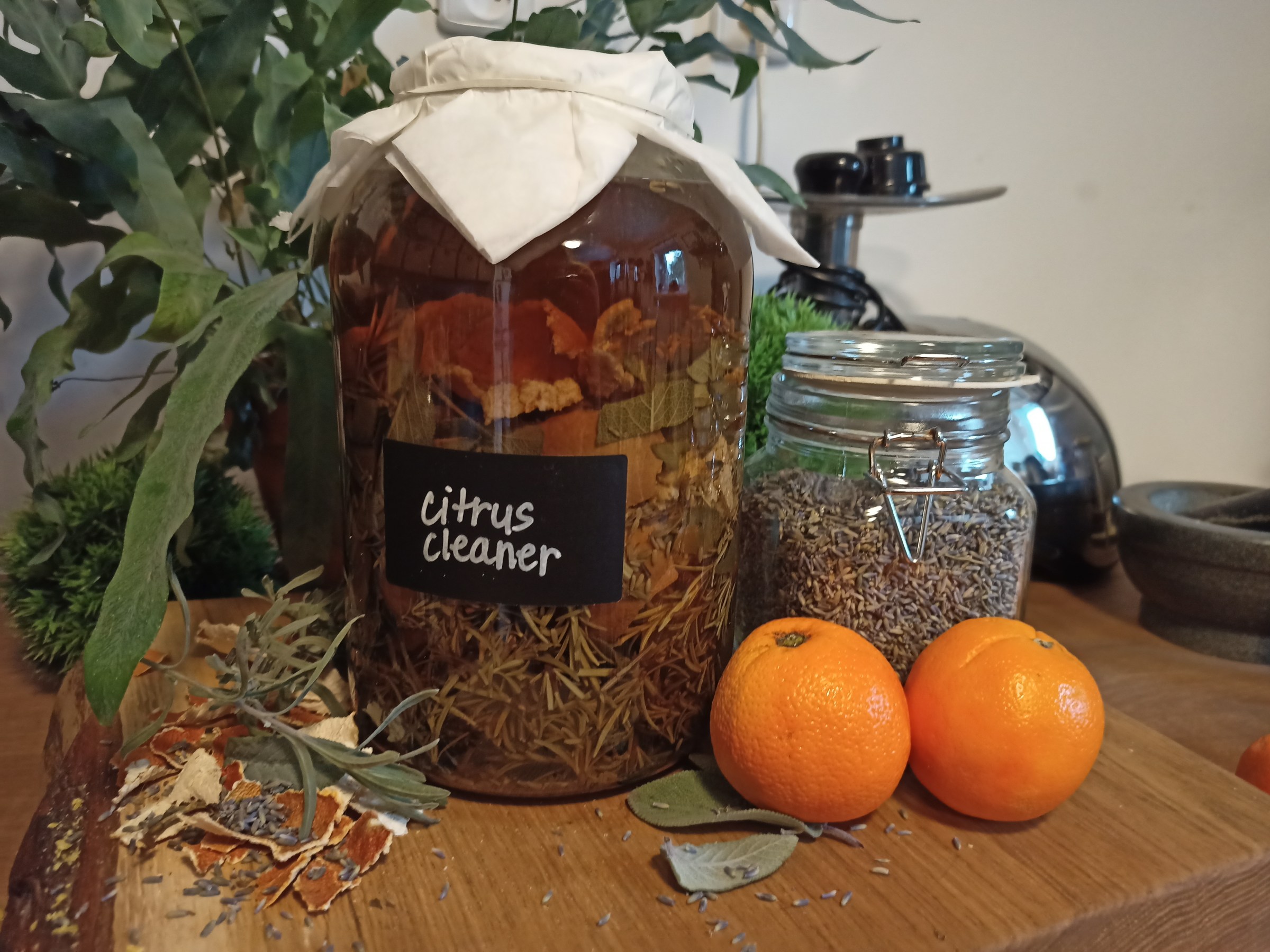
Our new (super old) farmhouse comes with a barely functional septic tank (cesspool is actually the right term here). If we want the thing to work, which we do, we can’t use any chemicals in the house or it will kill the good bacteria that we want. It seems step three of my all-natural, plastic-free journey came sooner than I expected.
Reevaluating how we clean the house, how many plastic bottles and how many chemicals we use has been really interesting and making the switch from chemical cleaners to all-natural ones isn’t easy. Our expectations of what cleaning is, how clean something should be and what it all will smell like in the end are deeply ingrained within us and it is a process that we can delicately, respectfully and gently flow through and the results will be discovered along the way.
The whole family must be considered when taking on this challenge. Not everyone in the family will be fans of the all-natural cleaning experience in the beginning. Or ever. Be prepared for a little cynicism from the more vocal of your family members.
Let’s get started:
I began by researching natural cleaning products. The ones in our bio/organic shops here are so super expensive and are still often in plastic spray bottles. I found recipes online for vinegar based cleaners, but my family hates the smell of vinegar, and I really was skeptical if it could clean all the surfaces that need cleaning.
What motivated me though, was the idea that I could make the cleaning concentrate myself, it could be actually edible, wouldn’t harm anything, could be put into repurposed plastic spray bottles that once held our “normal” cleaning products and could be effective.
Here’s the result:
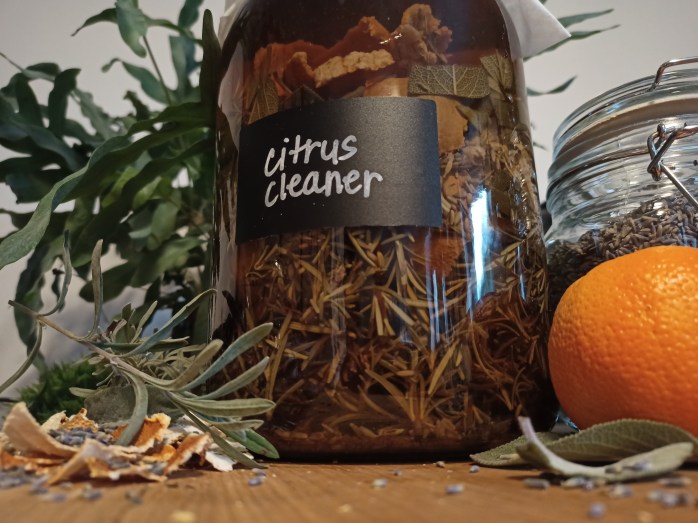
What you need:
- a large glass jar
- loads of plain vinegar
- loads of fresh orange peel, enough to fill the jar
- loads of fresh lavender, sage, rosemary
- essential oil blend (I use my own theives oil blend)
Fill the jar 2/3 full with orange peels
Roughly chop up the herbs
Fill the rest of the jar with the herbs
Fill to the brim with the vinegar
Cover with baking paper and a rubber band
Let sit for 8-10 weeks
Check occasionally that all of the plant material is covered with vinegar
Decant into clean spray bottles
Fill spray bottle 1/3 with the cleaning solution
Add 10 drops of essential oil
Fill to the top with water
Shake well before using
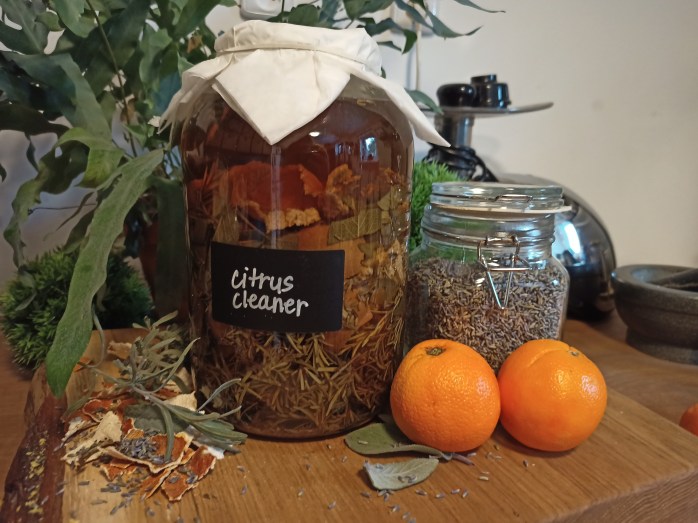
I have now used this cleaner exclusively for 4 weeks. It does take a bit getting used to the vinegar smell. I am still looking to rework the recipe to help lighten that particular scent.
I find this cleaner super effective, it has cleaned up the kitchen, bathroom, floors, cat vomit, carpets, cat vomit again and mirrors. I was really surprised how well it cleaned glass and left no streaks. It has anti-bacterial and degreasing properties.
My family is using it as well, with varying degrees of annoyance at the vinegar scent. It doesn’t last, the aroma is surprisingly short-lived, but it is something to think about when making this change.
It feels good to use this natural cleaner. I feel like it is making a difference for our family and in some small way, for the planet. I encourage you to give it a try, and if you have any ideas about how to improve this recipe, please share them.
Theives oil recipe
- 35 drops clove essential oil.
- 30 drops lemon essential oil.
- 15 drops cinnamon bark essential oil.
- 13 drops eucalyptus essential oil.
- 7 drops rosemary essential oil.
The Art of Scars
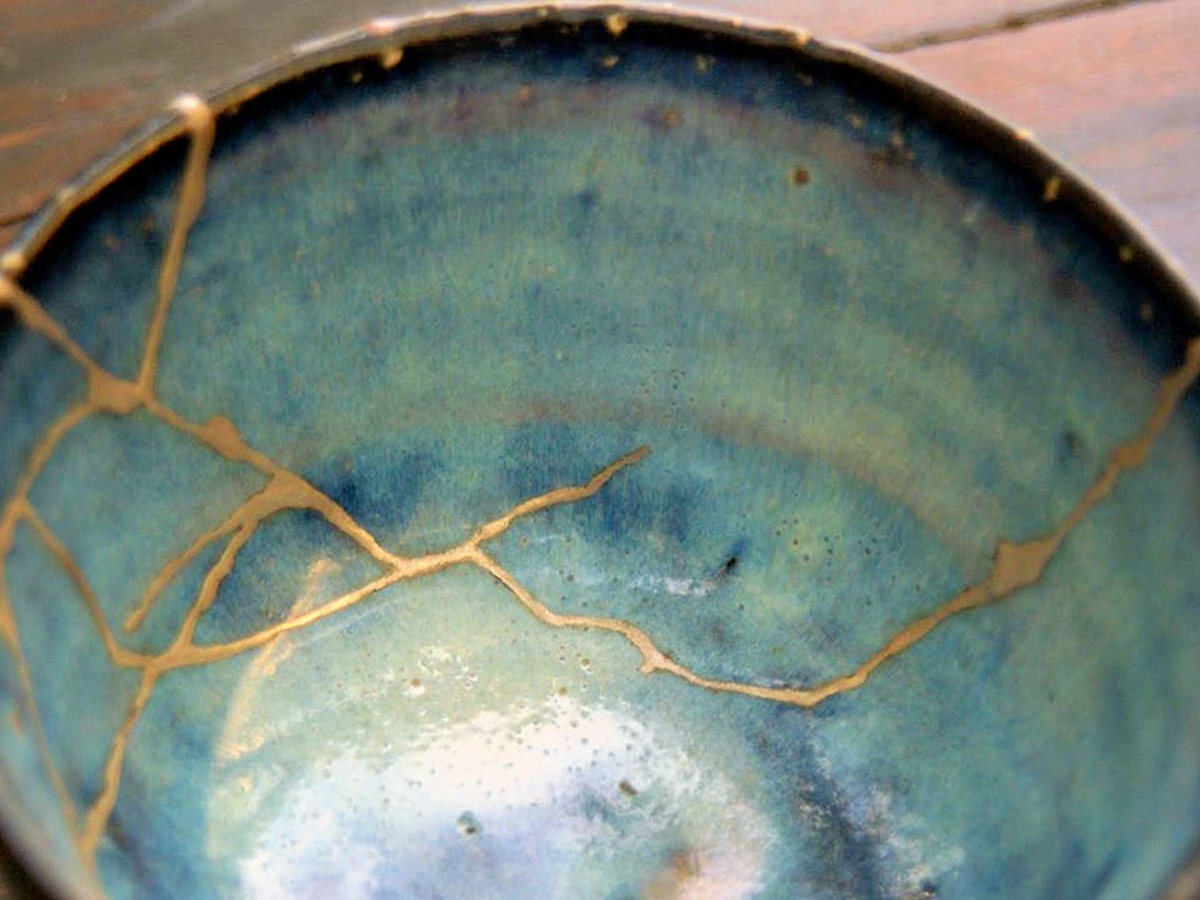
I am currently in the hospital. I had a nervous breakdown. After childhood trauma and many years of unending stress and suffering that increased in intensity, I broke…into pieces.
I had a powerful vision earlier this week:
It was of a precious ming dynasty vase that had been broken into many many pieces and clumsily taped together forming a vase that looked like a vase but couldn’t hold water. The tape was taken off piece by piece and those pieces freed from the tape gently floated swirling slowly in the air until all the pieces had been freed. Nothing remained of the shape of the vase, only the pieces scattered swirling in the air. I am that broken taped-up vase. The tape is now being released and the pieces are drifting apart. It is uncomfortable and frightening. What if I lose one of the pieces? What if they drift too far away? Can I hope to be whole, not taped up haphazardly, but standing strong and complete, beautiful and precious, able to hold the waters of my spirit and the tears of others without leaking?
České Budějovice, Psychiatric Hospital 21.2.21
After sharing my vision with a few people whom I love, they all pointed me in this direction: Kintsugi, the Japanese art of precious scars. I wanted to share this with you, because I believe many of us find ourselves in this broken space wondering if we will ever be made whole. The idea of Kintsugi resonates with me on a very deep level. We can and will be made whole, more beautiful and functional than ever before. Our Creator, our Potter if you will allow, will make from our pain and suffering something wholly new and devastatingly lovely.
Read on, I promise, it’s worth it….
Kintsugi: the Japanese art of precious scars
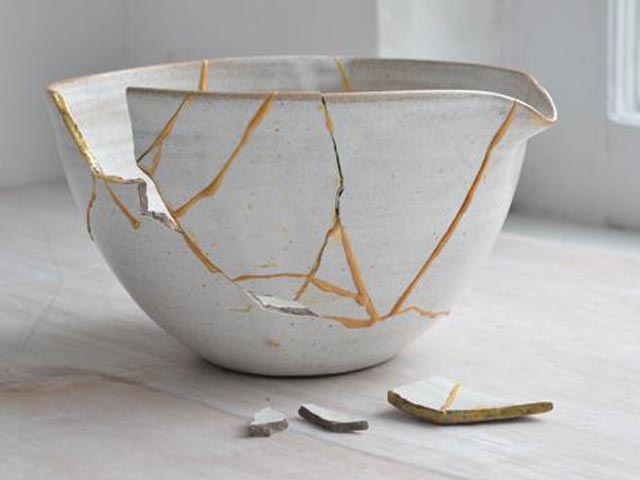
Kintsugi is a Japanese art form in which breaks and repairs are treated as part of the object’s history. Broken ceramics are carefully mended by artisans with a lacquer resin mixed with powdered gold, silver, or platinum. The repairs are visible, beautiful, and an antidote to the culture of disposability.
Kintsugi means “golden joinery” in Japanese. (Sometimes the process is called kintsukuroi, which means “golden repair.”)
Treehugger.com
Have you ever felt disposable? That your brokenness was so great that you couldn’t be repaired?
In my vision I felt sad that the vase was coming apart and a bit scared that some pieces might be lost. I was also hurting from the beauty of the vase, I felt a need to protect it because it was so beautiful and precious. I wasn’t terribly scared about losing the pieces once I saw that they were floating slowly surrounding the space the vase once occupied. I was concerned that it couldn’t hold water, that what was meant for it to do it couldn’t do in its current state and maybe would never be able to.
České Budějovice, Psychiatric Hospital 21.2.21
There are three types of Kintsugi repair:
The first level is when all pieces are available and the cracks are filled with gold to restore the piece:
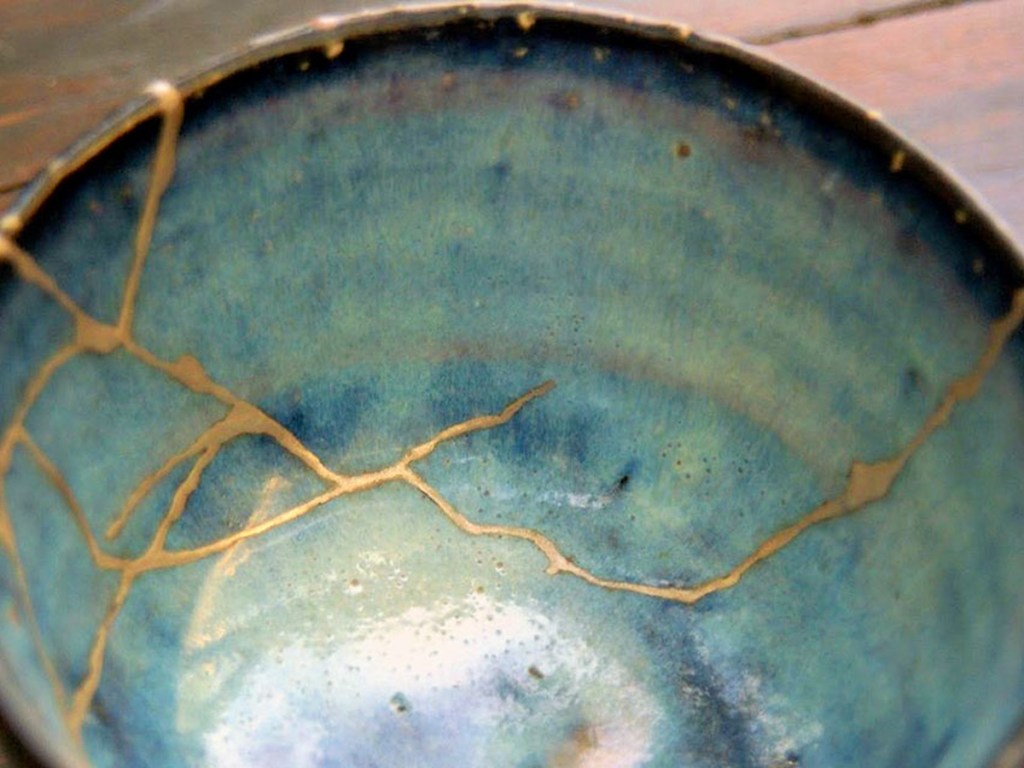
The next level is when small pieces are missing. Those areas are completely filled with gold:
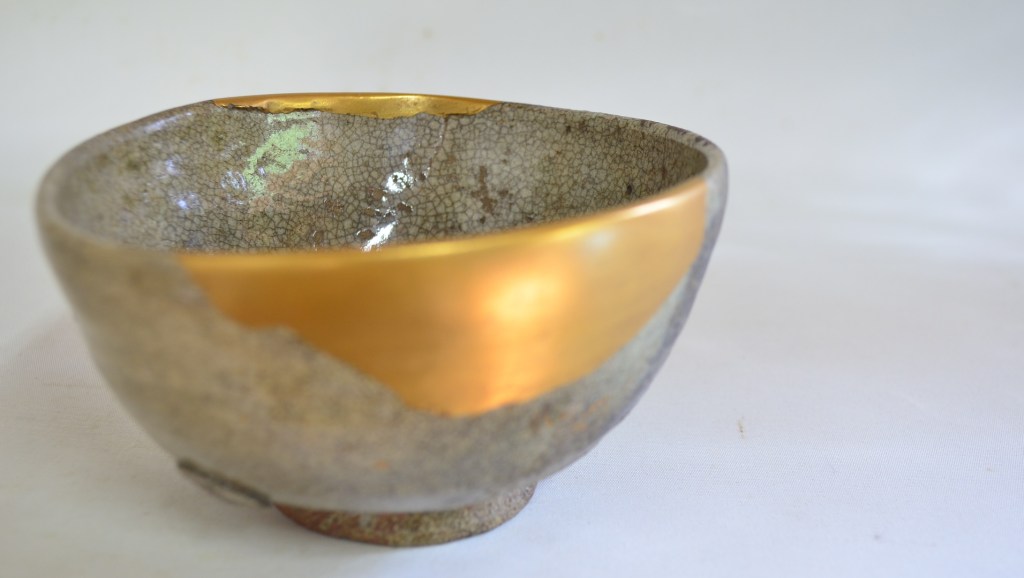
Last, when large areas of the piece are missing or shattered beyond repair, the artisan will take fragments from unrelated pieces to create a patchwork design:
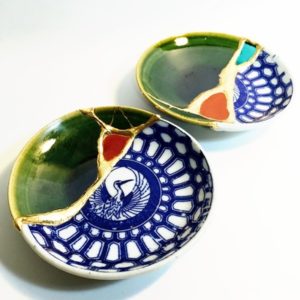
We are all a kintsugi work of art, precious scars on display, a transformation of radiant beauty from suffering, torment and pain.
I am deciding to engage in this process instead of trying to keep it together. The result will hopefully be a breakthrough but it is a weighty challenge.
In terms of idiom, the vision can suggest having been “cracked up” (crazy) already but keeping yourself together in artificial ways (tape is plastic, provisional, a weak bond, a temporary fix etc.). It can suggest also a lack of truth (ie ‘your story doesn’t hold water’). We can live in a way that is not true and sound. In this vision you were taking off the tape. This is necessary even though it means you lose your “shape” and can not be “useful” at the moment. I think that you may decide to lean in to this evisceration and debridement process in order to remove the tape. The floating particles strikes me as a magical, spiritual surprise that boded well for you. You didn’t fall to the floor and become sullied and discarded as a below worthless object that has been spent. In a way, your essence was liberated. The wholeness is there all along and freed from the tape, every particle of you can soar and fit into place perfectly and freely when it is time. There is another secret revealed here. You actually know your worth deep down. You are a priceless treasure.
České Budějovice, Psychiatric Hospital 21.2.21
my scars are precious
my scars are beautiful
Read on, my friends…
The Guest House
This being human is a guest house.
Every morning a new arrival.
A joy, a depression, a meanness,
some momentary awareness comes
as an unexpected visitor.
Welcome and entertain them all!
Even if they are a crowd of sorrows,
who violently sweep your house
empty of its furniture,
still, treat each guest honorably.
He may be clearing you out
for some new delight.
The dark thought, the shame, the malice.
Meet them at the door laughing and invite them in.
Be grateful for whatever comes.
because each has been sent
as a guide from beyond.
-Rumi
New Buddies
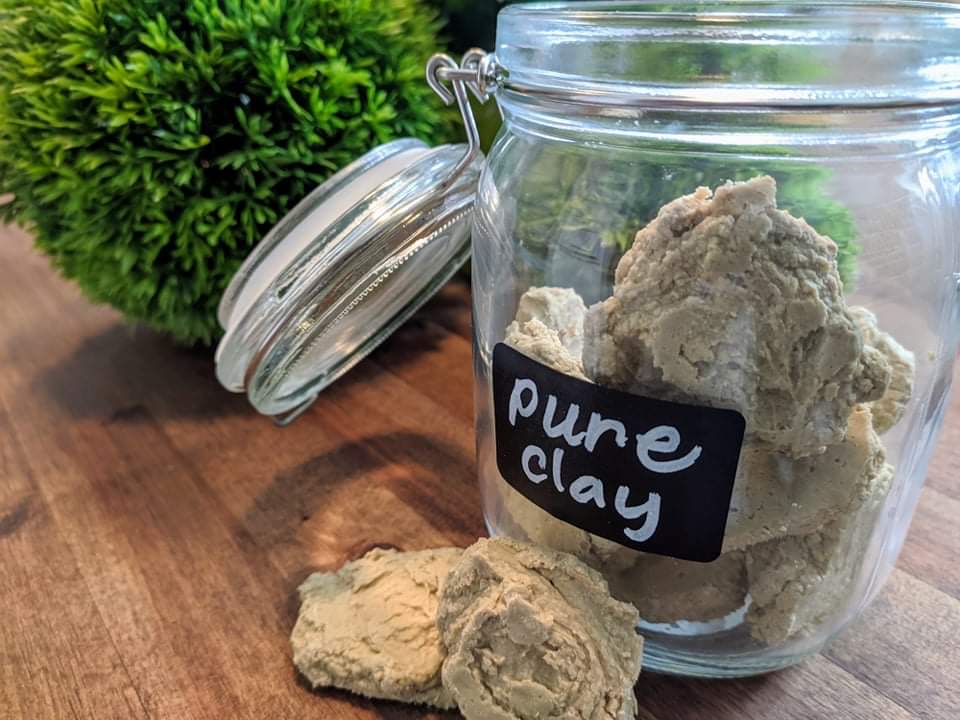
Making new friends is so fun!
I’m happy to introduce to you two new buddies in Krista’s Herbs Muddy Buddy Range:
Pure Buddy
Pure Buddies are for those with extremely sensitive skin or allergies who can or shouldn’t use products with fragrances. This Buddy is made with the most gentle of ingredients, including gorgeous Avocado Butter and loads of good intentions and love. It has the same cleansing and moisturizing effect as the other buddies in the range.
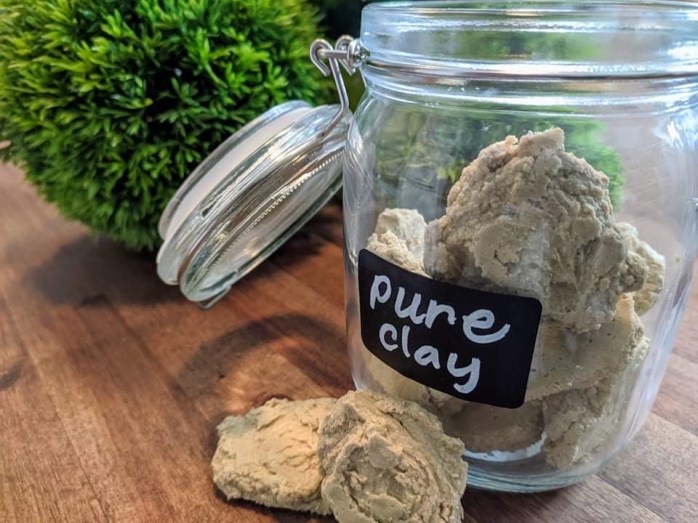
Pure Buddy Recipe:
- 1/2 cup (100 g) Avocado Butter
- 1/2 cup (100 g) Coconut Oil
- 1 1/3 cup (170 g) Kaolin Clay
- 1/4 cup (60 g) beeswax
- 1 cup (250 ml) medical grade Aloe Vera Juice
- 1 teaspoon Vitamin E oil
Calm Buddy
Calm Buddies are for those with irritated or worn out, damaged skin. These would be suitable for problems with rosacea, eczema or highly sensitive and troubled skin. Made with Kaolin and Bentonite clays, Chamomile hydrosol and delicate Blue Chamomile essential oil, they are calming and nourishing with a heavenly fragrance.
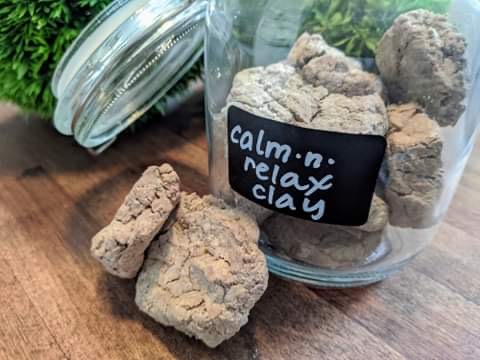
Calm Buddy Recipe:
- 1/2 cup (100 g) Shea Butter
- 1/2 cup (100 g) Coconut Oil
- 2/3 cup (85 g) Kaolin Clay
- 2/3 cup (85 g) Bentonite Clay
- 1/4 cup (60 g) beeswax
- 1/2 cup (125 ml) medical grade Aloe Vera Juice
- 1/2 cup (125 ml) Chamomile hydrosol
- 1 teaspoon Vitamin E oil
- 20 drops Blue Chamomile essential oil
Muddy Buddies
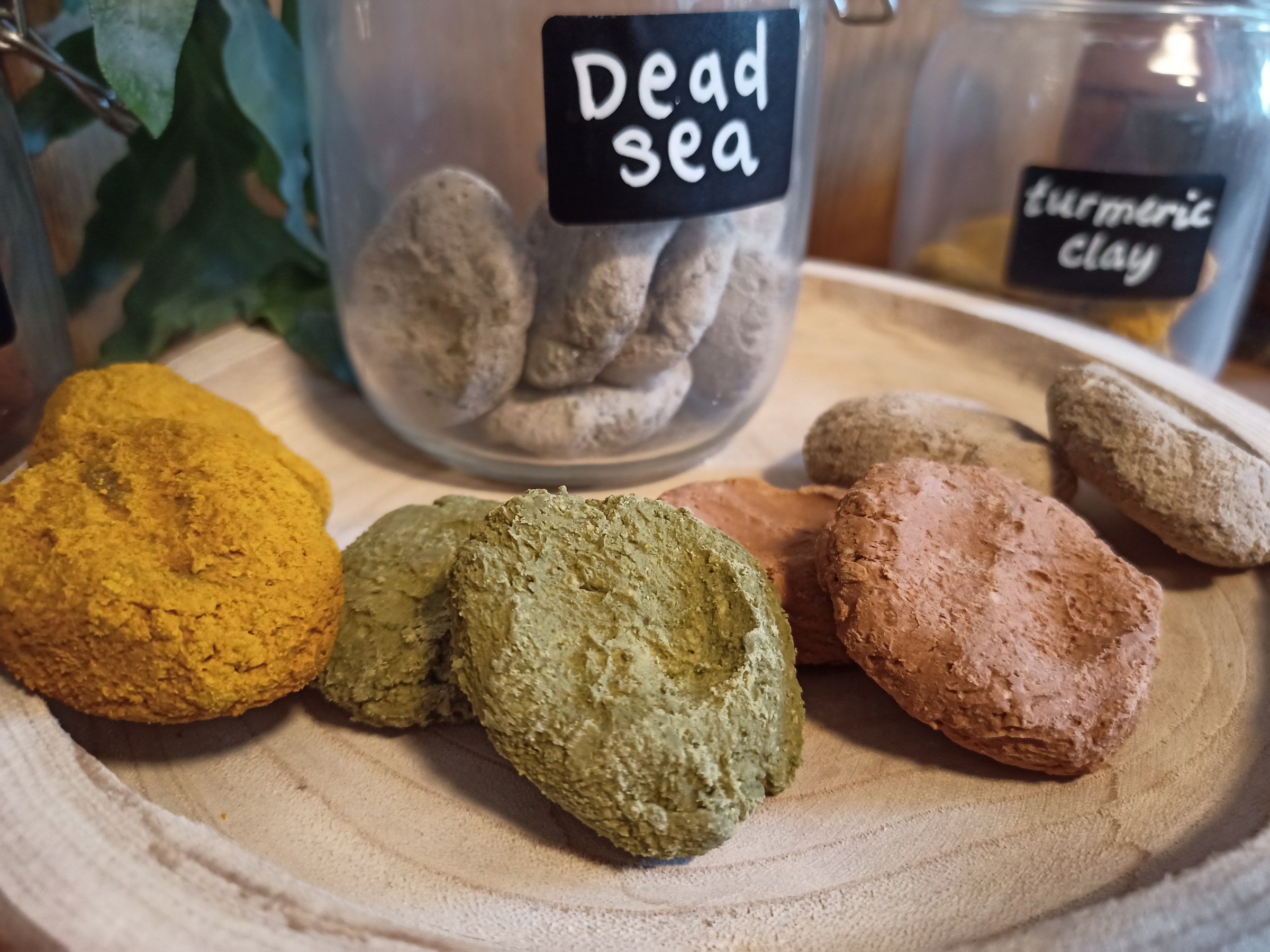
Every time I want to clean my face, here’s how it goes: I squeeze some gel from a plastic bottle and wash my face. Then, I squeeze some face scrub out of a plastic tube and exfoliate my face. After my shower, I take out a moisturising cream from a plastic tub and smear some on my dried out skin (dried out from too many soap products). In total, I’ve used at least three products with three plastic containers and I’ve managed to harm my face in the process because I’ve dried out my skin with soap and chemicals, tried to replace that moisture ineffectively and failed to really clean my skin.
I searched for soap-free facial cleansing products that were all-natural, super cleansing and moisturising and which didn’t come in plastic packaging. Even better if there was no packaging at all.
All package-free facial cleansing bars that I found were still soap-based. So I decided to make my own.
Using the natural drawing power of clays which cleanse by drawing out toxins and dirt from the skin, mixed with the deep hydration of natural butters and oils, my skin is clean and moisturised for the whole day, not greasy and I find that no extra creams are necessary.
Muddy Buddies are amazing to me. I think they might be one of my favourite products that I make.
Each Muddy Buddy is made of Shea Butter, Coconut oil, Natural Clays, Aloe Vera, Floral Water, Beeswax, Vitamin E oil and Essential oils.They are nutrifying, cleansing, regenerating, moisturizing and all-natural, made from locally-sourced ingredients.
Different Muddy Buddies suit different skin types and conditions.
Here’s what all the cool kids are saying about Muddy Buddies:
How can I express my love for the Muddy Buddy? The rustic charm of this product is so appealing to all my senses! It is one of my favourite products and I have used mine so many times and I still have loads left!!!!! Genius product dearest Krista -Vicky
THE CLAY MASK IS OFF THE CHARTS! Last night my face felt like it was at a spa that I cannot afford! I rubbed it on my cheeks but then it was on my hand so I put the bar down and spread it with my hands around my face. I loved removing it with hot water and feeling cleansed yet deeply moisturized- Pamela
I use the muddy buddy every morning and night and my skin has become flawless. No pimples, no dryness, no discoloring. I highly recommend this product for anyone.-Dyami
What you need:
- 1/2 cup (100 g) Shea Butter
- 1/2 cup (100 g) Coconut Oil
- 2/3 cup (85 g) Kaolin Clay
- 2/3 cup (85 g) Natural Clay of your choice
- 1/4 cup (60 g) beeswax
- 1/2 cup (125 ml) medical grade Aloe Vera Juice
- 1/2 cup (125 ml) hydrosol of your choice
- 1 teaspoon Vitamin E oil
- 20 drops essential oil
Let’s get started:
In a double boiler (or a pot nestled in a larger pot filled with a bit of water) over medium heat, add the oils, butters and beeswax.
Stir until the beeswax and butters melt and are fully incorporated.
Whilst the butters and wax are melting, in a seperate bowl mix together the clays.
Add the essential oils, aloe juice, hydrosol and Vitamin E oil to the clays. Stir.
Remove the melted wax and butters from the heat. Add this liquid to the clay mixture.
Mix well until fully incorporated.
The mixture should be smooth, yet like wet clay.
Form the mixture into smooth cookie-sized patties (this will be messy) and put them on baking paper on a prepared baking tray.
Let them dry in a warm, dry area for 2-3 days. (I use a dehydrator on 35 degrees Celsius)

Krista’s Herbs Muddy Buddies Range
Rose Buddy: fragrant with soothing Damascus Rose, this natural Pink Clay cleanses and moisturizes all skin types gently.
Green Buddy: French Argyll clay detoxifies, cleanses and is gentle on damaged and troubled skin. Tea Tree and Red Thyme oils deeply cleanse and purify.
Moroccan Buddy: Rhassouli clay cleanses mature skin while deeply moisturizing and protecting. Geranium oil regenerates skin.
Turmeric Buddy: Turmeric and Apple Cider Vinegar, along with Clary Sage help decrease brown spots, dark patches and under eye circles.
Dead Sea Buddy: Dead Sea Mud cleanses deeply while giving vital minerals and hydration back to worn out skin.
Pure Buddy: Kaolin and Bentonite Clays along with Shea and Avocado butters cleanses and moisturizes without any fragrance. Aloe Vera water is deeply hydrating.
Calm Buddy: Kaolin clay with Chamomile hydrosol and Blue Chamomile essential oil soothes and calms irritated and sensitive skin.
Scrubby Buddy: Pink Clay cleanses, Shea Butter soothes and moisturises whilst ground strawberry seeds gently exfoliate all skin types.
Kid Buddy: Fun to use and fragrant with lavender, this natural French Purple Clay Buddy gives a chance for kids to enjoy a skin care routine.

How to use your Muddy Buddy:
- Rinse your face liberally with water.
- Gently rub your Muddy Buddy on your face, neck and chest using circular motions.
- Allow to dry for a few minutes.
- Rinse with warm water.
- Keep your Buddy in its cloth sack to stay safe and dry.
Herbal Deodorant
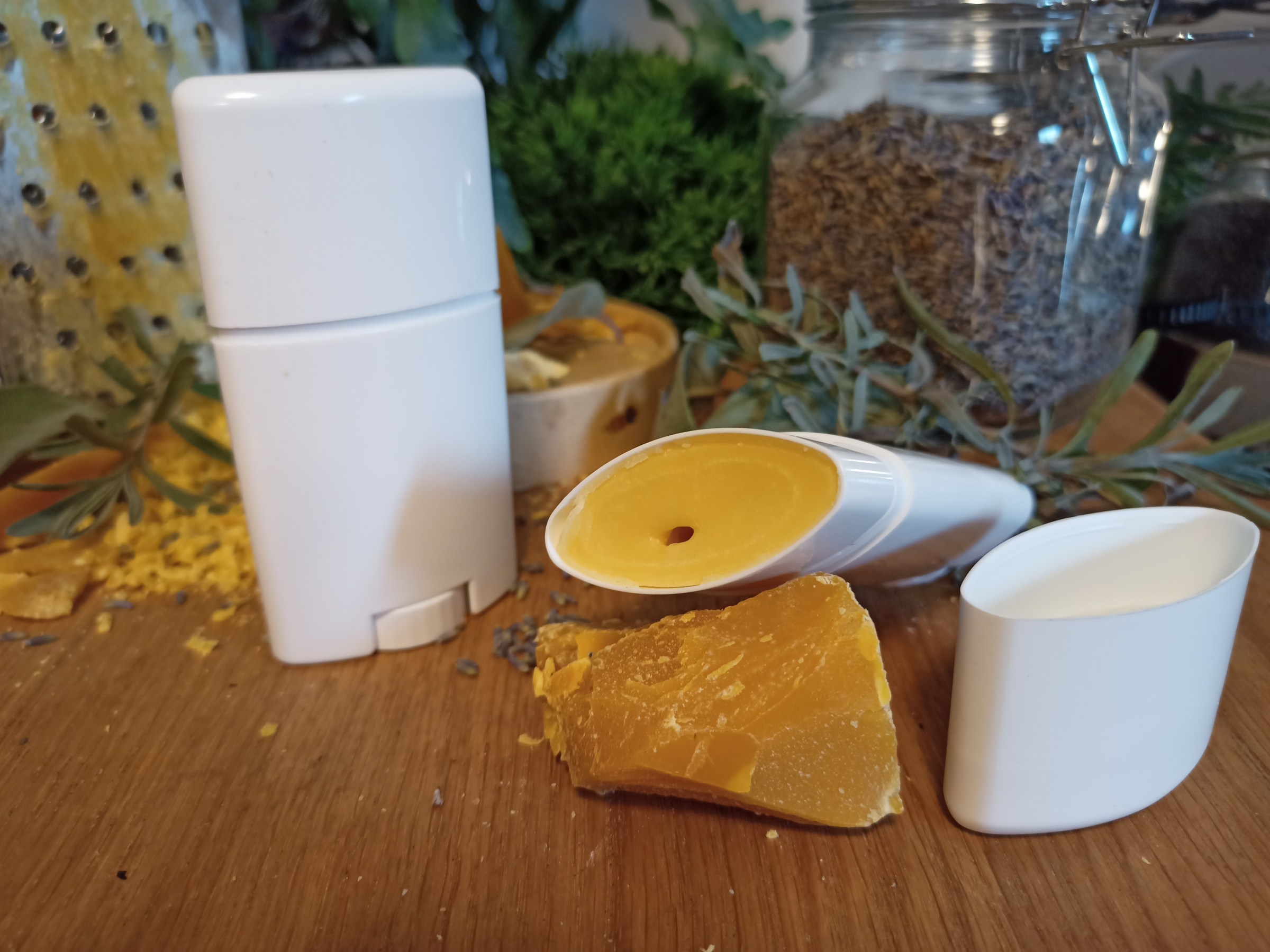
I am on a challenging quest, and it is two-fold: to replace my current health and beauty products by making them myself with natural, responsibly-sourced plant materials AND to reduce the amount of single-use plastic that comes into my house.
My dream would be that my workshop would be a place where people would come and get their facial bars, shampoo bars, herbal soap concentrates, refill their deodorants and cleaning sprays and grind their grains into flour or perhaps make oils that they need. This already functions at my herbarium on a small community scale, but I see this as a service that more people could benefit from.
So, little by little, step by step, I am pushing forward to realize this dream. Here is my next piece of the puzzle: Krista’s Herbs Herbal Deodorant.
For right now, it is in a plastic, refillable deodorant tube. My next step will be to make the deodorant in a small glass jar so that it can be applied with your fingertips. I’m curious how many of you would be willing to take that big leap from a normal store-bought deodorant to a natural one that you apply with your fingers? Please let me know. I’d like to start working on it right away!
This deodorant is easily applied, smells great and works well. It is suuuuuper good for your skin and is easily refillable.
A small anecdote: I am currently in hospital (more on that in a later post) and all of us on my ward played ping-pong yesterday for an hour. It was quite vibrant and my herbal deo didn’t let me down.
My recipe is made with sustainably-resourced plant materials, beeswax from our village beekeeper, locally made essential oils and butters and loads of good intentions and love!
What you need:
- 1/2 cup (120 g) Mango Butter
- 1/2 cup (105 g) Coconut oil
- 1/2 cup (110 g) Beeswax
- 1 cup (120g) Arrowroot powder
- 1 teaspoon Vitamin E oil
- 20-30 drops essential oil
Let’s get started:
In a double boiler (or a pot nestled in a larger pot filled with a bit of water) over medium heat, add the oils, butters and beeswax.
Stir until the beeswax and butters melt and are fully incorporated.
Remove from the heat.
Add the essential oils, and Vitamin E oil. Stir.
Add in the arrowroot powder. Mix well untill fully incorporated.
Pour into clean deodorant containers.
Recipe fills 4 deodorant tubes

Krista’s Herbs Deodorant Range
Herbal Deodorant: This one is the most effective if you are exercising or off on a busy day and want to feel fresh all day
Recipe: 10 drops each of rosemary, lavender and sage
Citrus Deodorant: This one smells like lemon meringue pie!
Recipe:15 drops each of yuzu (or lemon) and lemon verbena
Pure Deodorant: I made one with no scent for those who prefer fragrance-free products
Recipe: replace mango butter with avocado butter and do not add any essential oils
Perfume 201
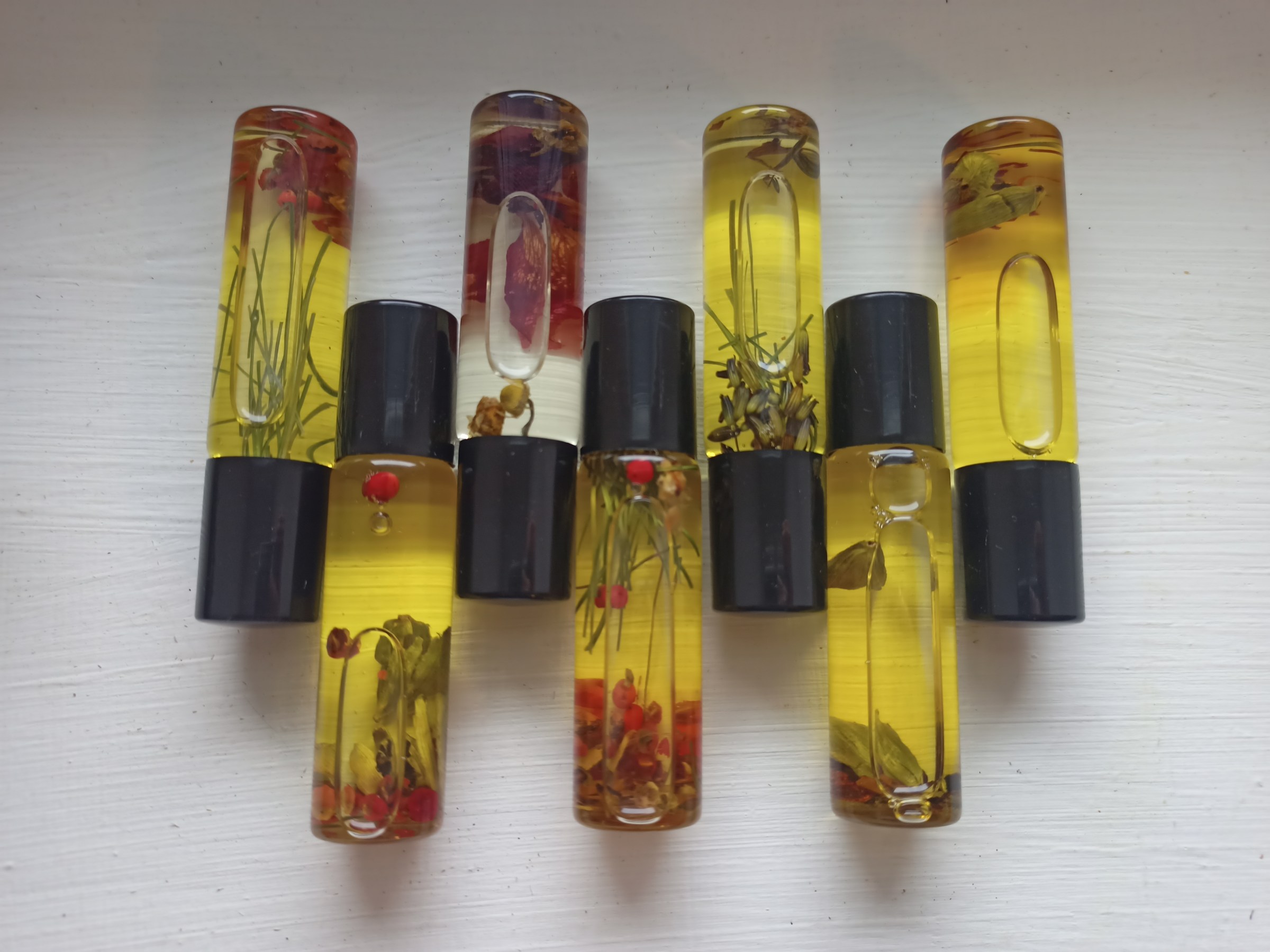
“Nothing brings to life again a forgotten memory like fragrance.”
Christopher Poindexter
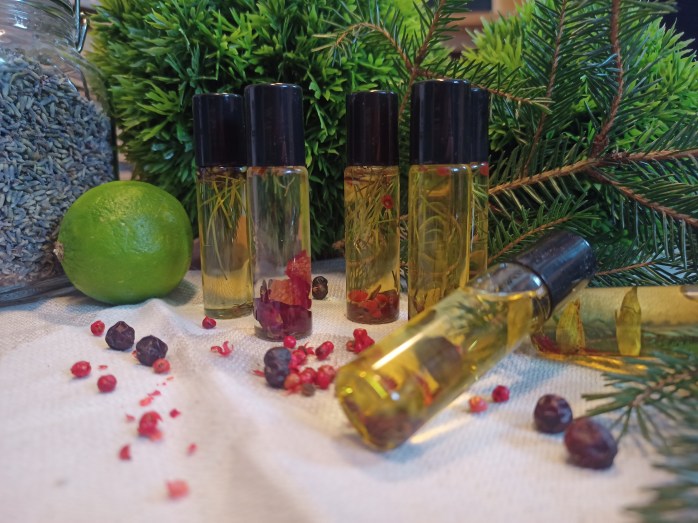
I gave a small eulogy at my Nana’s memorial service. I talked about a sense memory that has never left me though it is over 40 years old. Whenever I smell freshly squeezed orange juice, I am instantly transported to my Nana’s breakfast nook, I am 4 or 5 years old and she is serving me breakfast, as always with a small juice glass of orange juice. One of those juice glasses from the 70’s that had the brown and orange dots or stripes on them. Do you remember those?

Scent is so powerful. For each of us there is some scent that resonates with us so deeply, as a memory, as a spiritual or sacred connection, as a communication with a loved one here or gone, or as part of our healing path. Instinctively, we know we are somehow connected to this scent, or need to be connected to this scent. It is sometimes said in herbal writings that if a plant smells foul to you, it may be that that plant won’t work for you. The opposite being also true, that if a plant smells good to you, it is possible that it may be a good match for you. The sense of smell should be taken into consideration on your healing herbal journey.
Essential oils by scent:
Citrus: bright and cheerful scents to energize and perk you up
- Bergamot
- Sweet Orange
- Grapefruit
- Lemon
- Lime
- Mandarin
- Yuzu
Floral: floral essential oils are evocative and transport one to gardens of childhood
- Neroli
- Rose
- Jasmine
- Ylang Ylang
- Chamomile
- Geranium
- Petit grain
Herbal: fresh and healing, they invigorate, calm and improve focus
- Rosemary
- Peppermint
- Lavender
- Eucalyptus
- Sage
- Yarrow
- Basil
Spicy: sensual and warming, a little goes a long way with these
- Clove bud
- Cinnamon
- Ginger
- Patchouli
- Vanilla
- Nutmeg
- Cardamom
- Fennel
- Black/Pink Pepper
- Terragon
- Licorice fennel
- Anise
Woodsy: earthy scents that are grounding, strengthening and balancing
- Cedarwood
- Sandalwood
- Juniper
- Pine
- Vetiver
- Spruce
- Bay
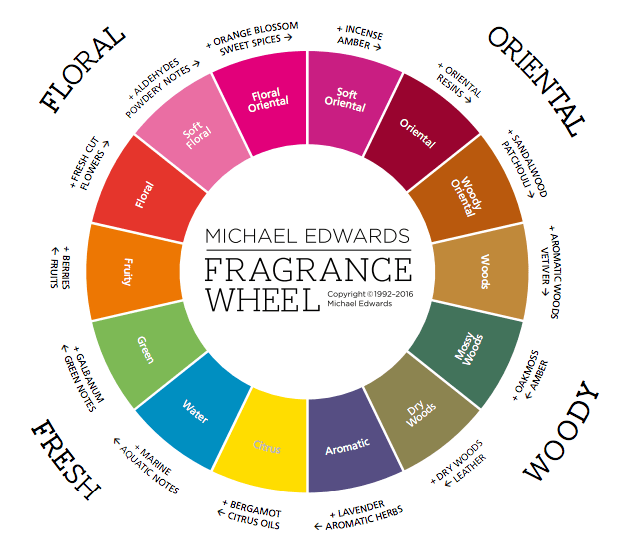
Michael Edwards’ Fragrance Wheel
This fragrance wheel by renowned fragrance expert Michael Edwards can help you organise scents into categories and keep the information clear.

Krista’s Herbs Spring Scents
Recipes:
Bright– 2 drops bergamot, 4 drops sweet orange, 1 drop grapefruit, 3 drops rosemary
Sweet– 2 drops neroli, 6 drops Damascus rose, 2 drops ylang ylang
Grassy– 3 drops rosemary, 2 drops mint, 4 drops lavender
Sensual– 3 drops cardamom, 2 drops cinnamon, 1 drop clove, 5 drops patchouli
Earthy– 3 drops patchouli, 4 drops hinoki wood, 1 drop vanilla, 2 drops cedar
Forest– 1 drop mint, 2 drops rosemary, 2 drops lemon, 2 drops sage, 6 drops pine
Heaven– 2 drops lemon, 3 drops lime, 5 drops vanilla
Resources for scents:
A year of soaps: spring
One day, I would love to make soap from scratch. You know, get out the lye, the safety goggles and the industrial gloves and get to work. But I have so many projects going right now that soap making from scratch is on the back burner, as is making my own essential oils in a copper distiller…..sigh….
For right now, I use a much simpler method for soap making. Using ready made soap bases allows for anyone to make soap anywhere and anytime you like. I appreciate that I can still come up with amazing recipes for soaps with zero stress.
I buy my soap bases at ekokoza, but they are also available on Amazon. These melt and pour bases are available in a wide varitey of types and they are super easy to work with.
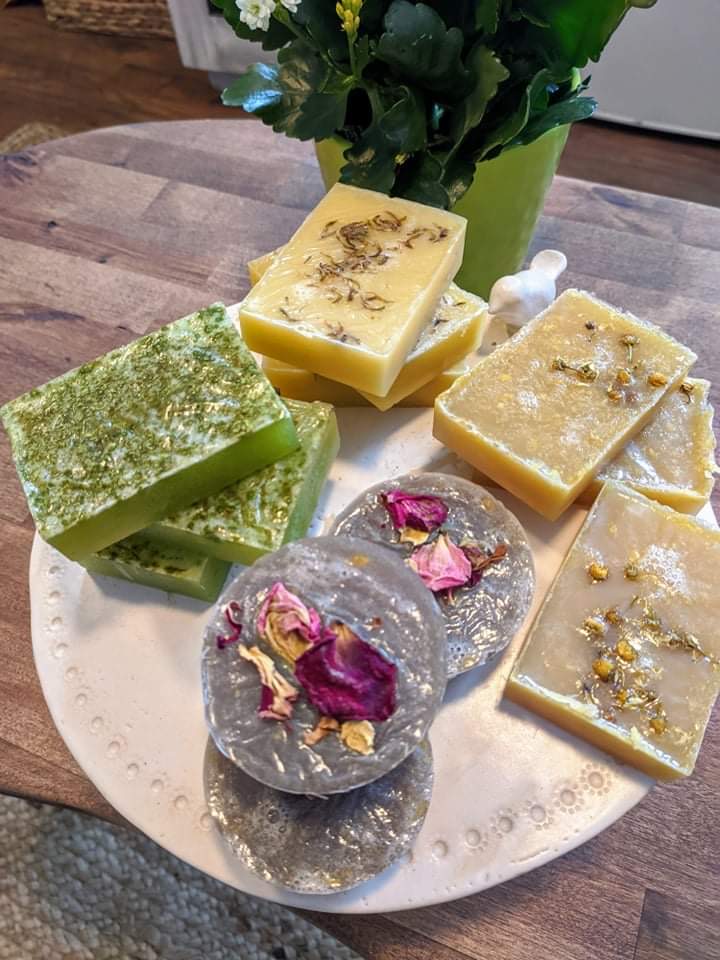
This season’s soaps are full of hopes for spring gardening, for when the blossoms start to pop out and the bees again buzz around. I spent the day in my workshop just adding things to these soaps that came to mind and I really like how they turned out.
My absolute favourite from these is the Green Tea-Hinoki soap. The scent comes alive in warm water and I find that I am using it exclusively now. I will make a few batches just for myself, I think.
Let’s get started:
This recipe will make 12-15 soaps depending on your mold shape and size. I use a common silicone muffin mold for some of mine and a proper silicone soap bar mold for others. It really depends on you and your taste and access to materials. I started with the muffin mold because it was what I had at the time. This is so cool that you can use what you have in the kitchen and not have to buy many extra things.
I try to steer clear of molds that are small, seperate ones for individual soaps. I find them too fiddly and inefficient for large batches.
You will need:
- 1 kg of melt and pour soap base
- 2-3 T of infused oil of your choice (Olive oil can be used here)
- 30 g beeswax (I use this so the soap will last longer in the shower)
- 30-50 drops essential oils of your choice
- plant material that you would like to embed in your soap
Step by step:
- Prepare a bain marie (water bath) on a medium setting
- Cut up the soap base into small chunks (the smaller the faster they will melt)
- Add the beeswax and any infused oils you would like
- Stir until completely melted and all components are incorporated
- Once melted completely, you must act quickly….
- Add the essential oils and mix well
- Pour into prepared molds
- Once cooled, pop them out and let them properly dry and harden overnight before you package them in any way
How to prepare your molds:
Silicone molds need no perparation save for whatever plant material you would like to add to your soaps. If you would like plant material only floating at the top of your soap, put the material in the bottom of the mold before you pour in the soap. If you would like plant material running throughout the soap, you must pour in the soap and add the material to each mold after the soap is already in, slowly stirring while it is cooling so that it is evenly distributed. If you would like to add material to the soap only as decoration, simply sprinkle it on directly after pouring the soap into the molds.
Krista’s Herbs Spring Soap Collection:
Honey-Beeswax-Chamomile-Vitamin E Oil

Recipe:
- 1 kg honey soap base
- 5 T organic honey
- 3 T chamomile-infused almond oil
- 30 g beeswax
- 1 t Vit E oil
- 30 drops blue chamomile essential oil
Green Tea-Chlorella-Hinoki Wood
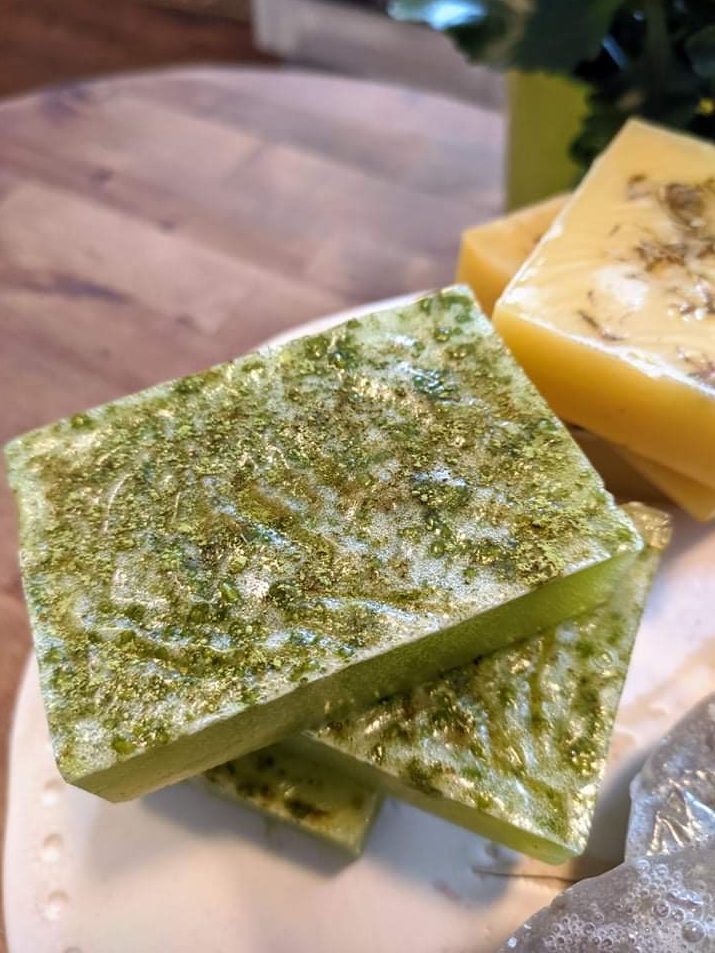
- 1 kg organic soap base
- 2 T green tea oil
- 2 T chlorella powder
- 30 g beeswax
- 2 T matcha powder
- 30 drops hinoki wood essential oil
Rose Oil-Alkanet-Geranium
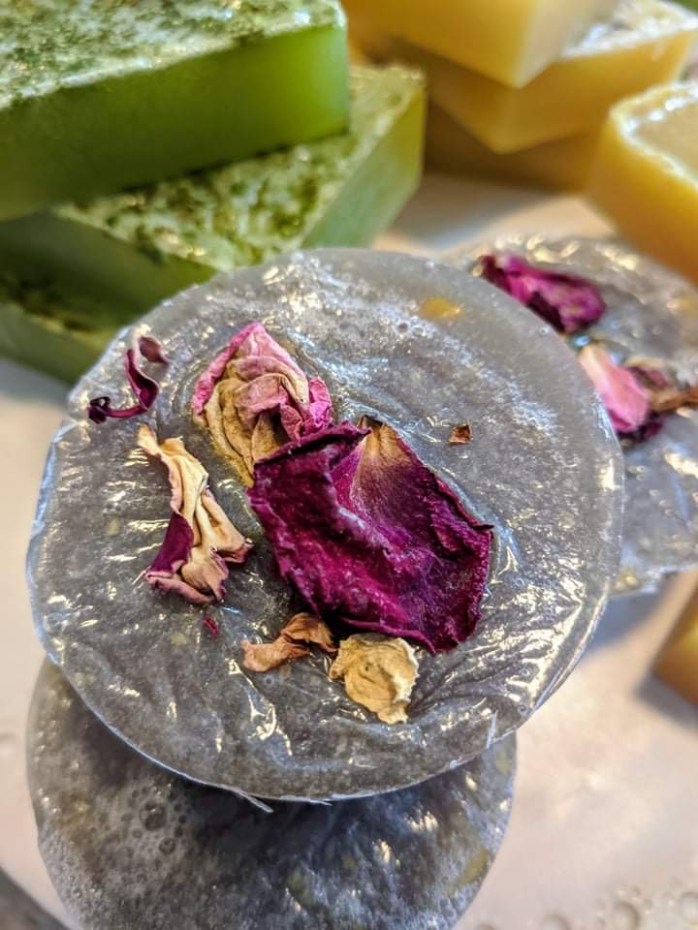
- 1 kg organic soap base
- 3 T rose-infused almond oil
- 2 T alkanet-infused almond oil
- 30 g beeswax
- 30 drops geranium essential oil
Honey-Rosemary-Red Clover-Vitamin E Oil

- 1 kg honey soap base
- 3 T red clover-infused almond oil
- 1 T rosemary-infused olive oil
- 30 g beeswax
- 1 t Vit E oil
- 30 drops rosemary essential oil

 Krista's Herbarium